1. Jingpohu Volcanic Crater
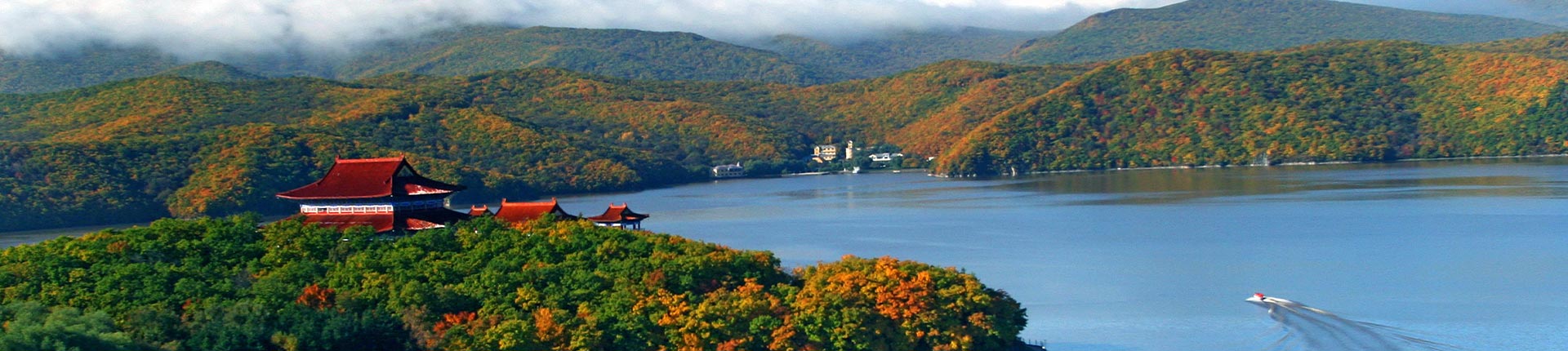
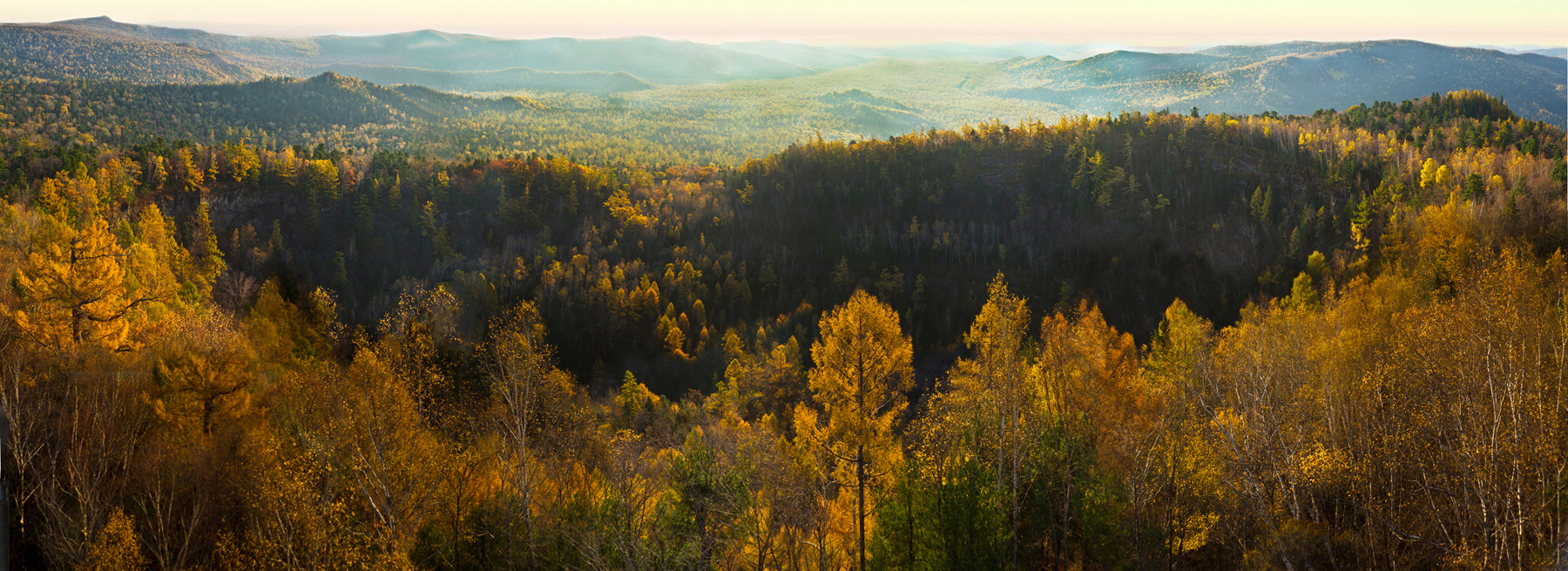
The Jingpohu volcanic cluster is located in Ning'an City, Heilongjiang Province, about 40 km from the northern end of Jingpo Lake, featuring over ten volcanic craters with extensive volcanic rocks distributed both on the surface and underground. The craters can be divided into eastern and western zones, encompassing five small eruption centers, each consisting of 2-4 craters. The western zone includes four eruption centers: "Volcanic Crater Forest," "Daganpao," "Wudaogou," and "Mihunzhen," comprising ten craters in total. The eastern zone has only one eruption center, "Hamatang," with two craters. The spatial distribution of these craters confirms the development of a northeast-trending tectonic structure for the Jingpohu volcanic cluster, controlled by the Mishan-Dunhua deep fault and its secondary northeast-trending and east-west faults, indicative of an intraplate tectonic environment.
The Jingpohu volcanoes have a relatively high average elevation, with an average relative height close to 300m and a maximum diameter exceeding 400m. They are generally circular or nearly circular in shape, featuring ring-shaped collapse structures. The craters are deep and funnel-shaped, with steep inner walls approaching 90 degrees. The ejecta are primarily composed of basalt, mainly consisting of volcanic bombs, scoria, volcanic ash, lava cakes, and some gravel.
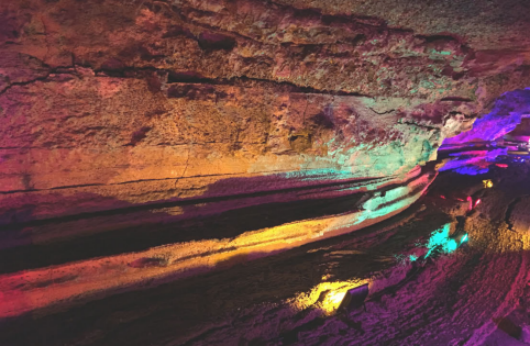
II. Jingpo Lake Lava Tunnels %% Within the approximately 26-kilometer-long lava flow from the "Underground Forest" crater to Xiaobei Lake, a total of 10 collapsed entrances of lava tunnels have been discovered so far. The longest continuous tunnel extends nearly 2 kilometers, while others typically range from 15 to 50 meters in length. The overall distribution of the lava tunnels aligns with the direction of the lava flow, trending northwest-southeast. However, the local orientation of individual tunnels intersects at certain angles with the flow direction. After the volcanic eruption, magma overflowed and flowed southeastward along the valley. Upon encountering cold air, the outer layer rapidly cooled and solidified into igneous rock, while the interior remained highly heated and continued to flow. When no new lava replenished the flow, hollow spaces formed, creating underground lava caves. The structure of each tunnel's entrance, ceiling, walls, and floor is similar, yet each exhibits unique morphological features. The tunnel ceilings are adorned with multicolored lava stalactites, while the walls feature horizontally developed lava beds and basins. The floors are decorated with lava flowers and rope-like formations. Inside the erupted lava flows, several lava tubes of varying sizes formed, each following slightly different paths within the overall flow. During their development, these tubes merged or diverged, creating branching patterns within the lava tunnels. The phenomenon of tube convergence and divergence results in the intricate branching observed inside the lava caves.
In the approximately 26-kilometer-long lava flow from the "Underground Forest" crater to Xiaobei Lake, a total of 10 collapsed entrances of lava tunnels have been discovered so far. The longest continuous stretch extends nearly 2 kilometers, while the others typically range from 15 to 50 meters in length. The overall distribution of the lava tunnels aligns with the direction of the lava flow, trending northwest to southeast. However, the local orientation of individual tunnels intersects with the flow direction at certain angles. After the volcanic eruption, magma overflowed and flowed southeastward along the valley. Upon encountering cold air, the outer layer cooled and solidified into igneous rock, while the interior remained at a high temperature and continued to flow. When no new lava flow replenished the channel, the emptying of the lava left behind underground lava caves. The entrances, ceilings, walls, and floors of these tunnels share similar structures, yet each exhibits unique formations. The cave ceilings are adorned with multicolored lava stalactites, while the walls horizontally feature lava beds and basins. The cave floors display lava flowers and rope-like formations. Within the erupted lava flow, multiple lava tubes of varying sizes formed, each moving in slightly different directions within the flow. During their development, these tubes underwent processes of convergence and divergence. The merging and splitting of lava tubes resulted in the branching phenomena observed inside the lava caves.
Lava Tunnels
III. Jingpo Lake Lava Flow
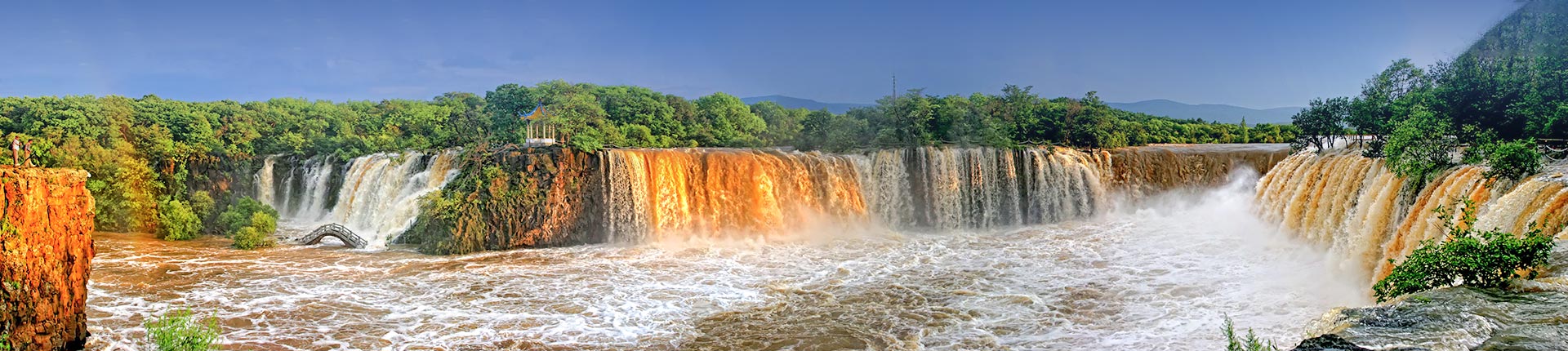
The lava erupted from the volcanic crater forest volcano, overflowing from the crater at an altitude of about 1000 meters, descended eastward along the mountain slope. It followed the Shitoudianzi River Valley and reached the Diaoshuilou Waterfall, forming a lava flow 40 km long and 1-2 km wide. The overflow exit was fan-shaped, with the fan surfaces of Craters I and IV extending several hundred meters wide. Below the Diaoshuilou Waterfall, the lava entered the broad Mudanjiang River Valley, forming a lava sheet 14 km long from east to west and 12 km wide from north to south (extending northwest to Bohai Town), with the altitude dropping to 309 meters. The portion extending east of the Mudanjiang River was approximately 11 km long and 1-2.8 km wide. The total length of the lava flow and lava sheet reached 65 km. This created a variety of micro-landforms such as slightly undulating ridges, mounds, drumlins, lava dams, stone ponds, lava gas caves, lava collapses, tension cracks, fumaroles, ropy lava, pahoehoe lava, and bread-crust lava.
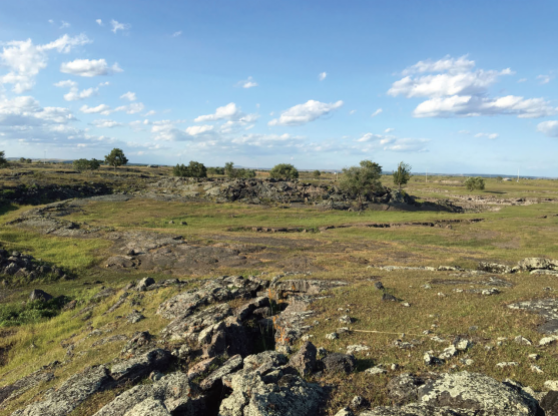
lava plateau
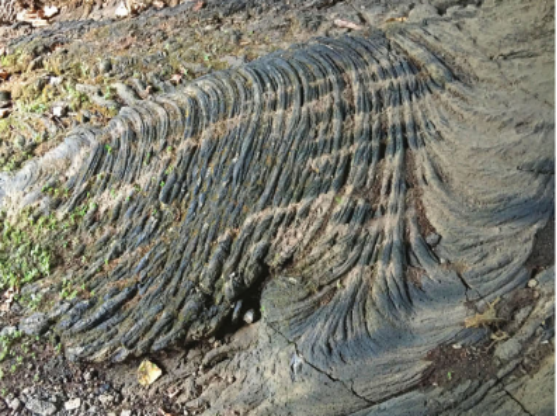
lava flow
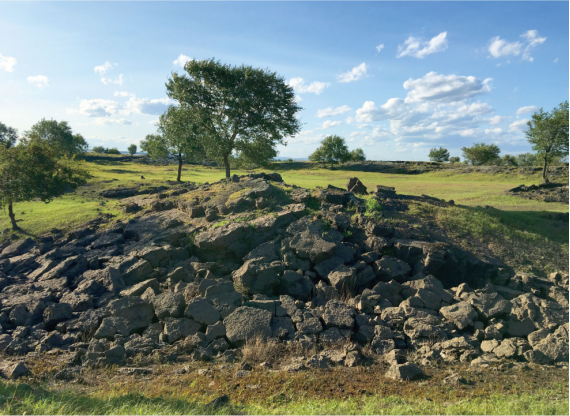
Drumlin
IV. Spatter Cone
A spatter cone is a circular, dish-shaped volcanic crater landscape. During the flow of hot magma on the surface, gases within the lava accumulate locally or encounter small amounts of surface water, leading to intermittent steam eruptions. These gas eruptions carry small fragments of lava, which accumulate layer by layer around the eruption center, ultimately forming a spatter cone.
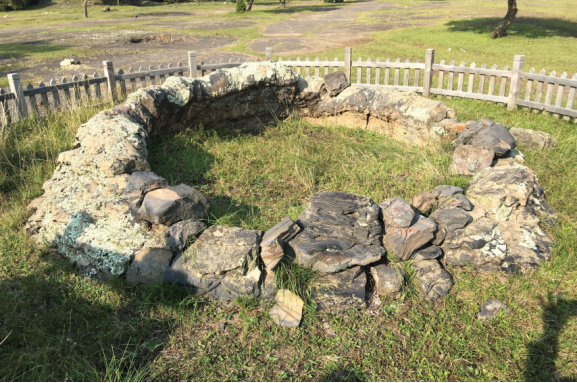
jet disc
5. Underground lava waterfall
The hot lava flow overflowing from the crater often forms lava waterfall landscapes when descending steep cliffs. Those occurring in underground lava tunnels are called underground lava waterfalls. The underground lava waterfall in the Jingpo Lake crater is approximately 8 meters wide, with a drop of about 1.5 meters and a slope of around 60 degrees. Its surface displays various micro-landform traces of lava flow, appearing in shapes resembling water streams, braids, spray, ripples, ropes, and elephant trunks. The lifelike forms are truly awe-inspiring.
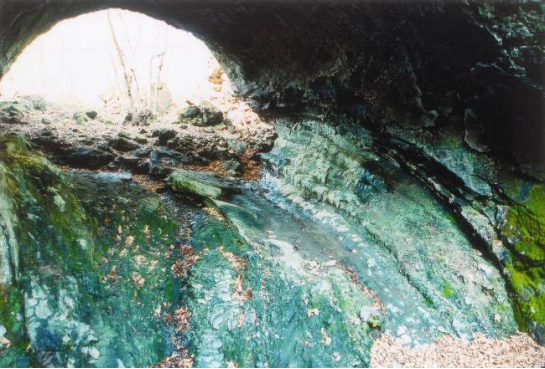
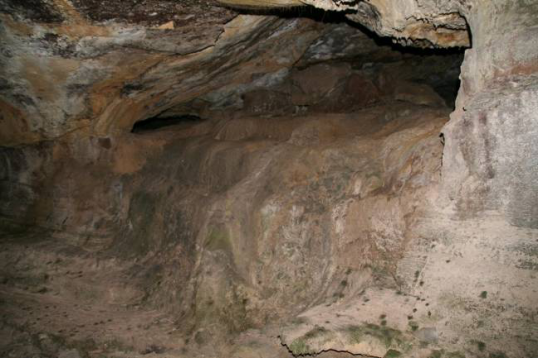
Underground Lava Waterfall
VI. Volcanic Bombs
Volcanic bombs are globs of lava with diameters exceeding 64 millimeters, formed from viscous magma fragments ejected during volcanic eruptions, taking shapes resembling bread, pears, spindles, or twists. During volcanic explosions, the scorching magma fragments are hurled into the air, where the still-molten lava masses acquire a rounded form due to spinning mid-flight. These bombs typically land not far from the crater, with diameters usually ranging from 8 to 20 centimeters, and larger ones measuring 50 to 90 centimeters (found near Craters III and IV).
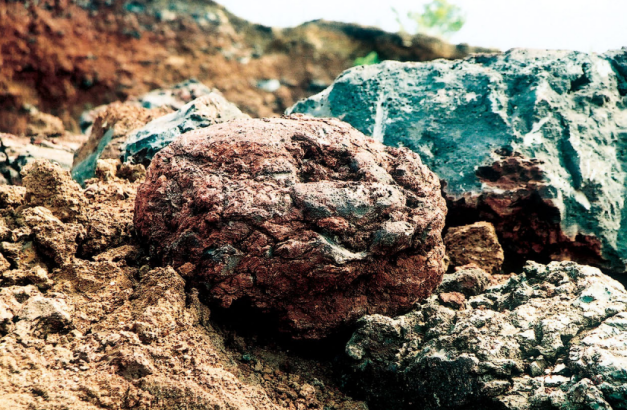
Volcanic bomb
7. Fog Cave
The Fog Cave is one of the most visually stunning and scientifically valuable landscapes within the lava tunnel cluster of Jingpo Lake UNESCO Global Geopark. It belongs to the lava cave group located in the Underground Forest Scenic Area of volcanic craters. The formation of the Fog Cave originated from the volcanic eruptions of the Jingpo Lake volcanic group. Around 4,800 years ago, during the last eruption of Jingpo Lake's volcanoes, massive basaltic lava flows surged down the river valley. The outer layer cooled and solidified first upon contact with the lower-temperature environment, forming a hard crust, while the high-temperature liquid lava inside continued to flow. Once the magma source was depleted and the internal lava drained away, hollow lava tunnels were created. The Fog Cave, as one of the exposed entrances formed by the collapse of a lava tunnel, gradually developed into the geological spectacle it is today—featuring both cave morphology and a peculiar fog phenomenon—through long-term weathering, erosion, and groundwater seepage. Its irregularly shaped entrance blends seamlessly with the surrounding lava plateau and vegetation, representing a classic manifestation of the late-stage evolution of lava tunnels.
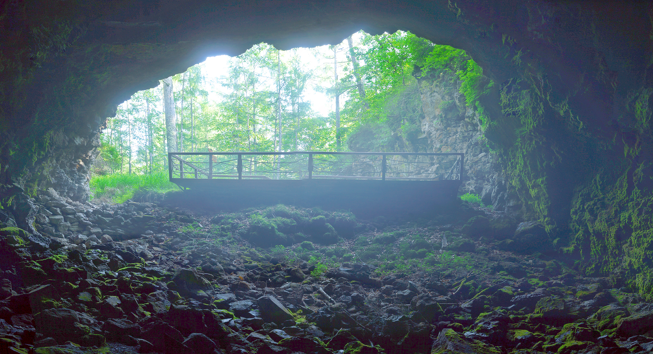
Fog Cave
8. Divine Goat Cave
The Divine Goat Cave is a typical lava cave formed by basalt lava flows during the last eruption of Jingpo Lake Volcano approximately 4,800 years ago and subsequently modified by later geological processes. During the eruption, high-temperature lava rapidly flowed along ancient river valleys. The outer layer, exposed to cooler air and water, quickly solidified into a hard basalt crust, while the inner molten rock continued to flow. After the magma source was depleted, a massive hollow lava tunnel was left behind. The Divine Goat Cave is a section of this lava tunnel where local collapse exposed the cave to the surface. Over thousands of years of weathering, erosion, and long-term groundwater dissolution, the cave entrance and internal passages gradually took their current shape. The cave derives its name from the natural rock formations at its entrance, which resemble a reclining goat. The irregular elliptical entrance is embedded within the dark basalt plateau, harmonizing with the surrounding mixed coniferous and broadleaf forest. It serves as an intuitive specimen of the mid-to-late evolutionary stages of a lava tunnel.
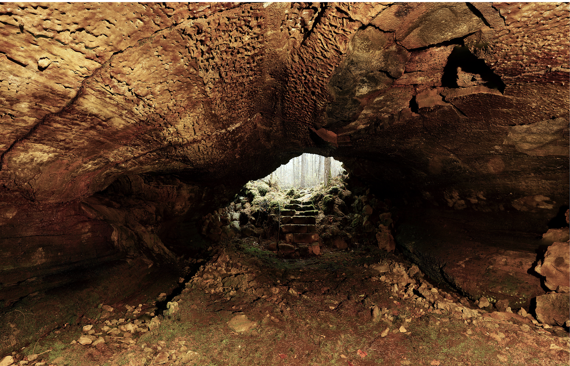
Divine Ram Cave
IX. Ancient Ice Cave
The Ancient Ice Cave is a distinctive periglacial geological feature within the lava tunnel cluster of the Jingpo Lake UNESCO Global Geopark. Its formation is closely tied to the evolution of lava tunnels and the regional climate: during the last volcanic eruption, basaltic lava flows created hollow tunnels, with their deeper sections forming relatively sealed environments due to distance from the surface and poor ventilation. Combined with the prolonged cold winters and deep underground permafrost in the Jingpo Lake area, cold air inside the tunnels could not dissipate effectively, accumulating over time into a persistent low-temperature cold storage layer. In summer, warm external air could not penetrate easily, maintaining year-round temperatures between -2°C and 0°C, transforming the cave into a natural "low-temperature ice reservoir." Meanwhile, groundwater seeping into the cave froze under these conditions, accumulating over millennia to form various ice formations such as stalactites, curtains, and waterfalls—earning the cave its name.
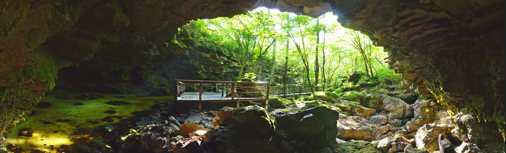
Ancient Ice Cave