

Ice and snow tourism is "on fire"! "Southern small potatoes," "little sugar tangerines," "southern mud transported north," "frozen pear platter," "Erbin"... During the short New Year's holiday, numerous internet "buzzwords" and "new terms" emerged, also giving rise to Harbin, the first "internet-famous" city of 2024.
According to data from Tongcheng Travel, domestic ice and snow tourism popularity increased by 216% during the New Year holiday compared to the previous period. Fliggy data shows that bookings for ice and snow tourism during the New Year holiday rose by 126% year-on-year, with Guangdong, Zhejiang, and Shanghai collectively accounting for about 30% of the national bookings.
Data from Harbin shows that during the New Year holiday, the city's tourist arrivals and total tourism revenue reached historic highs. Why did ice and snow tourism destinations like Heilongjiang and Jilin explode in popularity during the holiday? How can they sustain this momentum? Further enhancing the ice and snow experience, exploring ice and snow culture, and strengthening the entire industrial chain may be the "secret" to keeping the fire burning.
How popular is it?
The popularity of ice and snow tourism remains high.
New Year's Eve activities and galas have always been the highlight of the New Year holiday, but this year was an exception, with ice and snow tourism becoming the most eye-catching "dark horse" theme. According to Tongcheng Travel data, the ice and snow theme emerged as a major growth driver in the New Year's holiday cultural and tourism consumption market. During this year's holiday, domestic ice and snow tourism popularity surged by 216% month-on-month, with ice and snow sports, winter landscapes, and themed cultural tourism activities being the main attractions.
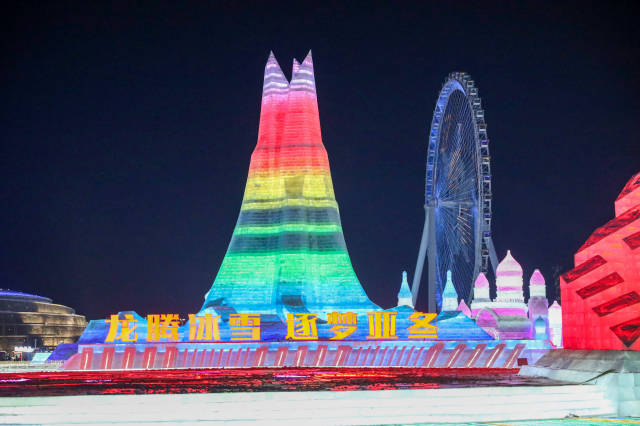
Harbin Ice and Snow World. Photo by Shi Qili
The data from Fliggy also shows that bookings for ice and snow tourism during the New Year's holiday increased by 126% year-on-year, with Harbin, Changchun, Baishan, Urumqi, and Zhangjiakou being popular destinations. Guangdong, Zhejiang, and Shanghai ranked as the top three source regions for ice and snow tourists, collectively accounting for about 30% of the national bookings. Additionally, the data reveals that the popularity of outdoor ski resorts nationwide during the holiday more than doubled compared to the previous year, with Changbai Mountain, Songhua Lake, Yabuli, Chongli, and Beidahu emerging as top skiing destinations.
Harbin has become the first "internet-famous" city of 2024, winning big with its ice and snow tourism. Social media is flooded with trending content about Harbin pampering "Southern Tater Tots" and "Potato Princesses." To welcome tourists, flight attendants danced at the airport, symphony orchestras performed in shopping malls, and members of the Oroqen ethnic group interacted with visitors on the streets of Harbin with their reindeer. Even frozen pears and persimmons were sliced, plated, and served to guests in restaurants.
According to big data estimates provided by the Harbin Municipal Bureau of Culture, Radio, Television, and Tourism, as of the third day of the New Year holiday, Harbin had received a total of 3.0479 million tourist visits, generating a total tourism revenue of 5.914 billion yuan. Both the number of tourist visits and total tourism revenue reached historical peaks. Data from Tongcheng Travel shows that during the New Year holiday, Harbin's tourism popularity surged by 240% month-on-month, ranking fourth on the national destination popularity list. The local tourism boom is expected to continue through the winter and Spring Festival holidays.
Heilongjiang's cultural and tourism sector also achieved a bountiful harvest during the New Year holiday. During the 2024 New Year holiday, Heilongjiang saw a surge in tourism popularity, with record-breaking figures across multiple metrics. The province welcomed a total of 6.619 million tourist visits, marking a 173.7% year-on-year increase, which was 18.4 percentage points higher than the national average. Tourism revenue reached 6.920 billion yuan, up 364.7% year-on-year, surpassing the national growth rate by 164 percentage points.
As one of the "twin stars of ice and snow" in Northeast China, Jilin Province has also seen a tourism boom during the winter season. According to data from the Changbai Mountain Administrative Committee, the main scenic area of Changbai Mountain received 22,000 visitors during the 2024 New Year holiday, marking a 96.0% increase compared to the same period in 2023 and a 121.7% surge over 2019. Tickets for Changbai Mountain’s attractions were in such high demand that they became hard to secure, while hotel bookings in the resort area remained robust. Driven by the popularity of ice-and-snow tourism, homestay bookings across multiple cities in Jilin Province surged during the holiday. Data from Tujia shows that homestay reservations in Yanbian during the New Year holiday skyrocketed by 27 times year-on-year compared to 2023, while Changchun also ranked among the top in growth rate.
The Ministry of Culture and Tourism's New Year holiday market report shows that ice and snow tourism continues to gain popularity, with urban ice and snow-themed projects and theme parks becoming key consumption scenarios for leisure and entertainment. According to Guangzhou Guangzhilv International Travel Agency, as of January 3, the agency's winter tourism revenue has surpassed that of previous years, with Harbin Ice and Snow World, Snow Town, and Changbai Mountain being the most popular destinations among tourists. Many airlines are also increasing flights to major ice and snow tourism destinations such as Heilongjiang and Jilin.
Why fire?
Demand accumulated over three years
On social media, southerners traveling to the northeast for ice and snow experiences are humorously nicknamed "Southern Little Potatoes" or "Princess Potatoes," reflecting their soaring enthusiasm for winter tourism. "Those walking the streets in down jackets late at night or queuing at barbecue joints—99% are tourists from the south," chuckled Mr. Liu, a Harbin taxi driver. Few northeasterners linger outdoors at -20°C past midnight. "The once-quiet winter streets are now bustling with southern visitors, warming the atmosphere for us too."
The phrase "snow is the obsession of southerners," especially Cantonese people, who are jokingly called "lacking snow in the five elements," highlights how rare snowscapes in the south have become a major attraction. "I’ve never seen such a view before—it’s so novel," exclaimed Mr. Yu, a tourist from Guangdong, at the Ashada Rime Scenic Belt in Jilin. His "first-time" experiences extended throughout his winter trip in Jilin, including witnessing ice fishing, visiting ice sculptures, and trying skiing.
Fresh experiences are a key factor behind the popularity of ice and snow tourism. Many "southern taters" hope to enjoy activities like "flopping onto the snow," "building a snowman," "having a snowball fight," "eating a popsicle," "experiencing knee-deep snow," and "getting caught in a snowfall." Short videos and live-streaming sales are also fueling the ice and snow tourism boom. Dong Yuhui's poetic line, "If we stand under the same snowfall one day, it would count as growing old together in this life," has sparked widespread longing for such romance. Frequently trending moments—like imperial guards skiing, sword-flying heroines, and the widely imitated "water-tossing turns to ice"—are deeply local, fun, and shareable, perfectly aligning with today’s internet-driven travel trends.
However, the bigger reason is the pent-up demand accumulated over three years. In the past three years, due to travel inconveniences, many southern tourists eager to experience snow and ice had to postpone their plans repeatedly. The 2024 New Year's Day holiday was the first public holiday since 2020 when winter sports entered their prime season, making the surge in popularity expected. Data from Fliggy's travel platform shows that during the 2023 "Double 12" shopping event, sales of winter tourism products nearly tripled compared to the previous year. Similarly, a Tujia Homestay report indicates that as of December 13, 2023, bookings for homestays containing keywords like "skiing" or "snow and ice" increased by 7.5 times compared to 2019.
Popular attractions drive significant growth
The popularity of ice and snow tourism is inseparable from the "star effect" of leading scenic spots, as these "top-tier" snowscapes and winter experiences significantly boost the entire region. In Heilongjiang, the Harbin Ice-Snow World, China Snow Town, and Yabuli Ski Resort are the most renowned ice and snow tourism destinations, while in Jilin, Changbai Mountain, Chagan Lake, and Beidahu stand out as iconic "golden brands."
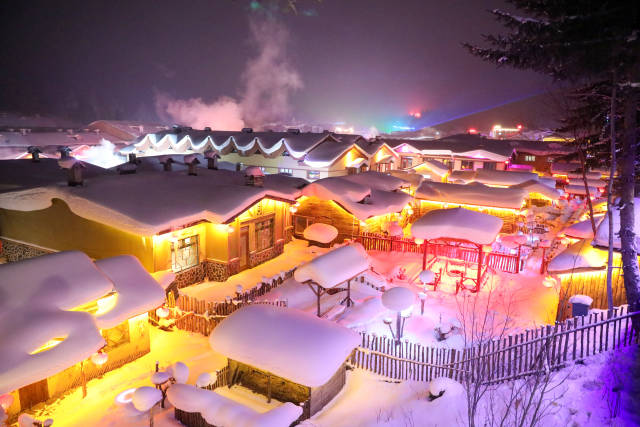
The snow village under the night sky, illuminated by lights, looks like a fairy tale world. Photo by Shi Qili
The top attraction for winter tourism in Harbin is the Ice and Snow World. During the New Year's holiday, the Ice and Snow World received 163,200 visitors, a 435% increase year-on-year, with revenue reaching 46.18 million yuan, up 494% year-on-year. Notably, on December 31, the park welcomed 64,886 visitors, exceeding the historical peak by 10.54%. Xuexiang (Snow Town) is a key "trump card" for ice and snow tourism in Heilongjiang. Its unique microclimate, described as "no three consecutive sunny days in summer, but snow blankets the forests in winter," creates a distinctive landscape unmatched nationwide. Data shows that during the New Year's holiday, Xuexiang attracted 44,600 visitors, a 240% increase year-on-year, generating 49.03 million yuan in revenue, up 399% year-on-year.
Harbin, Yabuli, and Snow Town form a golden tourism route, significantly boosting other scenic spots along the way. Located in Harbin, St. Sophia Cathedral and Central Street are must-visit attractions for tourists. This golden tourism route also includes many distinctive ice and snow tourism destinations such as Jingpohu, Yaxue Post Station, Hengdaohezi, and Datudingzi Mountain.
In Jilin, Changbai Mountain, a well-known winter vacation destination, has become the "golden signboard" of Jilin, playing a significant role in accelerating the local cultural and tourism market. In fact, many tourists come "specifically for Changbai Mountain," not only to enjoy the scenery but also to experience skiing, hot springs, unique accommodations, and dining. Their stays typically exceed 2 days, with some enthusiasts even extending their visits to over 10 days.
With the rise of skiing, the cultural and tourism-driven effects of leading ski resorts have also increased. For example, the Jilin Beidahu Ski Resort has boosted the local cultural and tourism economy, driving up revenues in surrounding areas such as dining and accommodation. For instance, Nangou Village in Beidahu Town, Yongji County, has leveraged the resort's resources to develop a distinctive homestay cluster, promoting employment and agricultural product sales throughout the village.
The ice and snow industry is diverse and multifaceted.
Even without having seen snow and ice, one day is not enough, one form is not enough, but two days and three forms can also lead to fatigue. How can we make the snow and ice experience richer and more layered? In Heilongjiang and Jilin, there are theme park-style ice and snow worlds and snow paradises, snow villages and rime landscapes for sightseeing, ski resorts like Yabuli and Beidahu, and Changbai Mountain for sports, as well as traditional experiences like winter fishing at Chagan Lake and Jingpohu. However, none of these are singular experiences; instead, with the continuous development and maturation of the snow and ice industry, they offer more layers and diverse experiences.
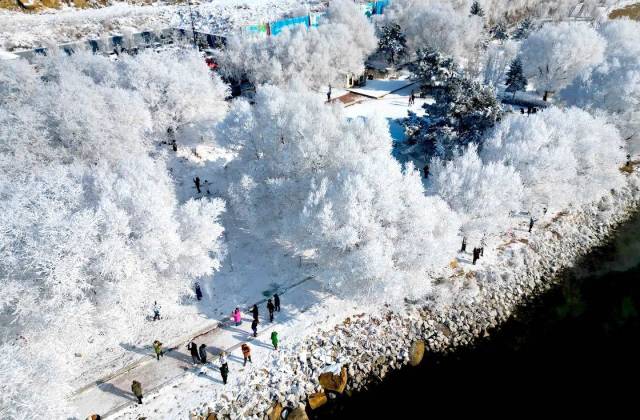
Jilin rime.
In Snow Town, besides experiencing a fairy-tale-like snowy world, the fiery night is just beginning under the evening sky. Visitors pour out in droves, swaying to lively music alongside yangge dance teams, and eventually gather at the bonfire square for a "down jacket" dance party in the snow. A representative from the Longjiang Forest Industry Group's Dahailin Forestry Bureau stated that in addition to the viral dance project, they will upgrade yangge performances, parade floats, and cartoon mascots, integrate homestays with strong Northeastern characteristics, build a tourism wedding industry chain, host romantic snowfield marriage proposals, create a signature Snow Town lantern street, and prepare for a snow sculpture competition. "We will develop three aerial laser light projection projects within the scenic area to ensure Snow Town offers something new every day."
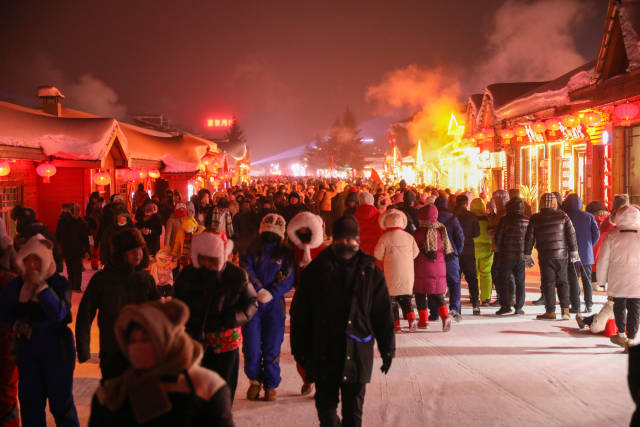
On the Xuexiang Snow Charm Street, tourists went to participate in snowfield disco. Photo by Shi Qili
Jilin's ice and snow tourism industry continues to upgrade, with traditional tourist destinations developing interactive products and scenarios beyond sightseeing to meet visitors' demand for immersive experiences. For example, during the winter fishing season, Chagan Lake Scenic Area launched a series of interactive activities, allowing tourists to personally experience traditional skills like ice fishing and underwater netting. Shan Junguo, director of the publicity center of the Qianguo Chagan Lake Tourism Economic Development Zone, noted that 10,000 to 20,000 visitors come daily to witness the winter fishing spectacle. To make Chagan Lake "both delicious and fun," the Chagan Lake Convention and Exhibition Center has created two themed sections—"Soaring Fish Market" and the outdoor "Ice Fish Snow Cave"—centered around the "Ice Fish Snow Cave Adventure" theme. Visitors can dress in Mongolian attire for photos or enjoy activities like snow cave ice fishing, snow cave archery, and snow cave slides.
The ski-focused Yabuli and the resort-oriented Changbai Mountain offer more than just skiing, featuring hot springs as well. The combination of "skiing by day and hot springs by night" is a popular multi-layered experience for many tourists. More "ice and snow+" formats or scenarios continue to emerge, expanding the boundaries of winter sports culture through crossovers with art, festivals, and more, such as photography exhibitions, winter food festivals, and ice and snow marathons held in Changbai Mountain.
Ecological management service enhancement
The booming ice and snow tourism is not only attributed to high-quality natural resources but also to excellent ecology, efficient management, and meticulous services. The "ice and snow powerhouses," Heilongjiang and Jilin, have made commendable progress in improving ecological conditions, enhancing management standards, and elevating service quality.
In terms of improving the ecological environment, taking Jilin as an example, the province has always adhered to the concept of ecological priority and green development, carrying out redevelopment on the basis of environmental protection. For instance, the Lushuihe Changbai Mountain Hunting Ground, with its vast expanse of pristine forest remnants and well-preserved forest ecosystem, has become an ideal paradise for wildlife habitat and reproduction. Within it, the Changbai Mountain Ancient Tree Park stands as Asia's largest iconic viewing area for virgin Korean pine forests, serving as a natural green oxygen bar and botanical museum.
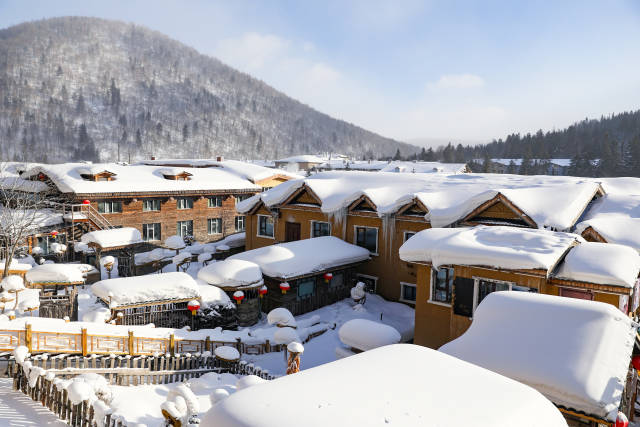
The snow-covered village in daylight is a vast expanse of white. Photo by Shi Qili
To enhance management levels, taking Snow Town as an example, in response to peak seasons, the Longjiang Forest Industry Group Dailin Forestry Bureau Company deployed over 500 staff members to strengthen scenic area operations. They formulated and implemented the "Snow Town Scenic Area Vehicle and Personnel Management Regulations," staggered visitor flows, and adopted a "grid-based" management approach. Additionally, a temporary parking lot spanning 32,000 square meters was added, and handheld ticket verification was introduced to prioritize visitor entry. A cultural tourism experience officer system was also introduced, where officers provided targeted feedback from a visitor's perspective. Through these scientific, institutionalized, and considerate service measures, the satisfaction of tourists in ice and snow tourism has been continuously improved. Meanwhile, in collaboration with the Mudanjiang Municipal Bureau of Culture and Tourism and relevant administrative departments in Hailin City, a meeting for tourism business owners was organized, where "self-discipline commitment letters" were signed, and management measures for "untrustworthy individuals" in the scenic area were refined. Over 1,200 complaint hotline signs were installed to ensure smooth complaint channels. The advance compensation mechanism was maintained to ensure prompt mediation and resolution of complaints related to the scenic area.
In terms of improving service quality, Harbin this winter has become a "model student," with the entire city embracing a "pampering fans" mode, going all out to meet the various needs of "Southern Little Potatoes" and "Potato Princesses." "Whatever tourists complain about in the comments, we provide what they need," said He Jing, Party Secretary and Director of the Heilongjiang Provincial Department of Culture and Tourism, in an interview. For instance, when a tourist mentioned it would be nice to have a moon during their photo shoot at St. Sophia Cathedral, we created an artificial moon. When tourists said Harbin was too cold, we built many small warm shelters. When tourists wanted to try frozen pears but didn’t know how to eat them, we specially prepared frozen pear platters.
Keep the fire burning?
Further enhance the ice and snow experience
Cultural tourism strategist Xiong Xiaojie, chairman of Times Tourism, pointed out that providing emotional value to consumers is one of the reasons for the popularity of winter tourism in Northeast China. He noted that to further enhance the ice and snow experience, efforts must first be made to improve the "software and hardware" of scenic spots. "Currently, apart from some leading brands, the facilities and service levels of a considerable number of scenic spots still need improvement. Especially when visitor numbers surge, issues like inadequate management and service often arise."
How to improve quality? The practices of the "Twin Ice and Snow Pioneers" can serve as a reference. According to the "High-Quality Development Plan for Jilin's Ice and Snow Industry (2021–2035)," Jilin will build an international ice and snow tourism consumption hub, adhering to high-quality and intensive development. It will promote "quantity control and quality improvement" for ski resorts across the province, accelerate the construction or upgrading of a batch of ski resort complexes and ice and snow towns, and cultivate several world-class ski resort complexes and year-round tourist destinations. Meanwhile, scenic areas such as Changbai Mountain and Beidahu are leading by example, continuously enhancing tourism service quality, refining product offerings, and boosting brand influence and reputation.
The "Heilongjiang Province Ice and Snow Tourism Industry Development Plan (2020-2030)" also mentions that, based on market demand, resource characteristics, and competitive analysis of similar tourism products, the key development directions for Heilongjiang's ice and snow tourism industry are three major pillar products: winter outdoor sports, flagship ice and snow attractions, and ice and snow festivals. The plan implements eight ice and snow tourism enhancement strategies, including promoting the transformation and upgrading of traditional ice and snow tourism destinations, developing new characteristic ice and snow tourism destinations, and introducing emerging ice and snow tourism products and projects.
To further enhance the ice and snow experience, while hardware is important, providing emotional value should also be emphasized. Xiong Xiaojie pointed out that offering visitors positive and uplifting emotional experiences is one of the reasons for the popularity of Northeast tourism and a key aspect of developing ice and snow travel. Taking the recent viral meme "Southern Small Potatoes" as an example, the nickname not only showcases the warm and humorous "persona" of the Northeast but also conveys a welcoming and friendly attitude toward southern tourists.
Further explore the ice and snow culture
The cultural traits reflected in the thick ice layers are entirely different. Harvesting delicious big fish from the lake—this is the unique fishing and hunting culture of Chagan Lake in Songyuan, Jilin. Carving them into exquisite artworks—this is the most famous ice and snow culture of Harbin, Heilongjiang. "To sustain the popularity of ice and snow tourism in the long term, it is essential to emphasize the exploration of ice and snow culture," Xiong Xiaojie pointed out. On one hand, it is necessary to fully tap into local specialties and scenes, such as Harbin ice sculptures and Jilin rime. On the other hand, it is also important to explore and package distinctive winter festivals and cultures like winter fishing and hunting, turning them into shared consumption scenarios for both locals and visitors. "This will not only ignite the enthusiasm and pride of local consumers but also greatly attract tourists from other regions."
The preservation of traditional customs and culture is key to Jilin's outstanding ice and snow tourism. The Chagan Lake winter fishing is an original fishing and hunting activity originating from the ethnic minorities in the north. As a national intangible cultural heritage, rituals such as lake worship, net awakening, ice chiseling, net casting, and fish leaping on frozen lakes have been preserved to this day. In the Jinjiang Wooden Village of Baishan City, visitors can not only admire the only remaining cluster of traditional Manchu wooden houses in Northeast China but also immerse themselves in the rich cultural history.
In addition to vertical exploration, the ice and snow culture also requires horizontal expansion to broaden integration. The "Heilongjiang Province Ice and Snow Tourism Industry Development Plan (2020–2030)" further highlights the need to develop ice and snow art performances and tours in flagship ice and snow tourism attractions, drawing inspiration from models like Cirque du Soleil and Disney on Ice, thereby enhancing the influence and immersive experience of Harbin’s "Ice Show." It also aims to elevate the prominence of Qiqihar’s ice and snow circus and ice hockey competitions. Recently, He Jing emphasized in a keynote address on "enhancing the influence of Longjiang’s distinctive tourism brand and promoting the prosperity of cultural initiatives and industries" that regular public cultural activities, such as the "Ice and Snow Wonderland · Beautiful Life" series, will be organized. Efforts will also be accelerated to advance key cultural and tourism projects, including the year-round Ice and Snow World and the renovation of the Baroque Historic Block.
The popularity of winter sports is linked to the current demand for niche and immersive experiences. Xiong Xiaojie pointed out that more efforts should be made to develop activities like alpine skiing, ice camping, and ice climbing to further enrich the cultural essence of winter sports. Alternatively, leveraging winter settings to integrate with events such as music festivals, marathons, and art exhibitions can attract more niche enthusiasts. "Today's niche passions can infect and influence mainstream consumer sentiment."
further strengthen the entire industrial chain
Frozen landscapes are also gold and silver mountains. A complete ice and snow industry chain is the foundation for the development of ice and snow tourism, winter sports, and snow culture. However, from the perspective of the entire industry chain, China's ice and snow industry chain remains quite weak, with significant room for improvement even in provinces like Heilongjiang and Jilin. For instance, existing ice and snow attractions suffer from pronounced seasonality and low annual occupancy rates; outdoor activities, winter sports, and experiential products are limited; the ice and snow tourism equipment industry lacks development and competitiveness; there is high overlap in key regional ice and snow tourism development priorities; and regional coordination remains insufficient, among other pressing issues.
The "Development Plan for the Ice and Snow Tourism Industry in Heilongjiang Province (2020–2030)" proposes extending the industrial chain of ice and snow tourism, promoting the integrated development of new formats such as traditional Chinese medicine health experiences with the ice and snow tourism industry, and building a well-structured, coordinated, and industry-integrated ice and snow tourism system to further enhance the core competitiveness of Heilongjiang's ice and snow tourism. By 2030, the province aims to attract over 200 million ice and snow tourists and generate more than 200 billion yuan in revenue from ice and snow tourism. The "14th Five-Year Plan for Cultural and Tourism Development in Jilin Province" outlines goals to build a strong tourism province and a powerhouse in the ice and snow economy, striving to achieve a total tourism revenue exceeding the "trillion-yuan" mark within 5 to 10 years. The plan also aims to establish Jilin as a leading ice and snow economy province in China and a world-class ice and snow tourism destination.
Industry insiders pointed out that building a modern ice and snow economy system and vigorously cultivating new business models and formats is the inevitable path for the development of the ice and snow industry. "Northeast China cannot rely solely on ice and snow tourism; it must vigorously develop ice and snow-related industries, especially consumer-friendly upstream and downstream sectors of ice and snow equipment. This will gradually break the dominance of foreign players in high-value-added industries like ice and snow equipment and foster homegrown ice and snow equipment brands."