


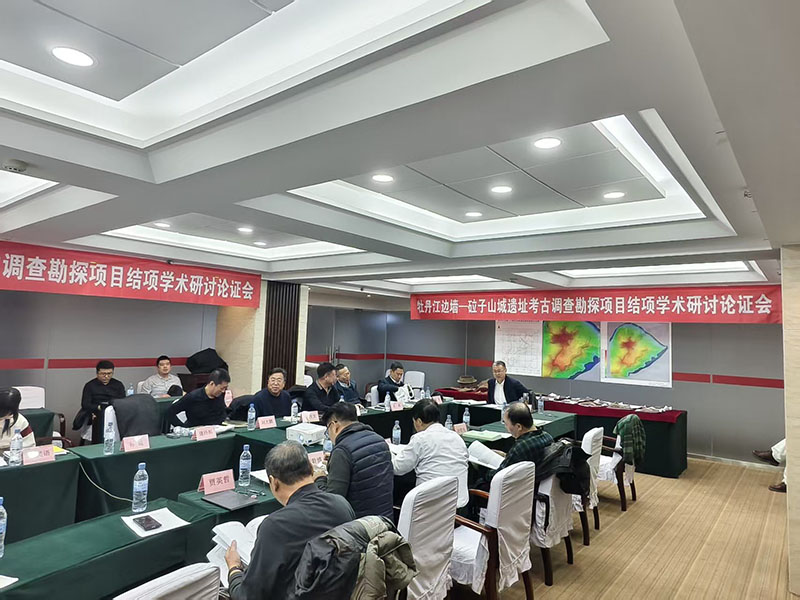
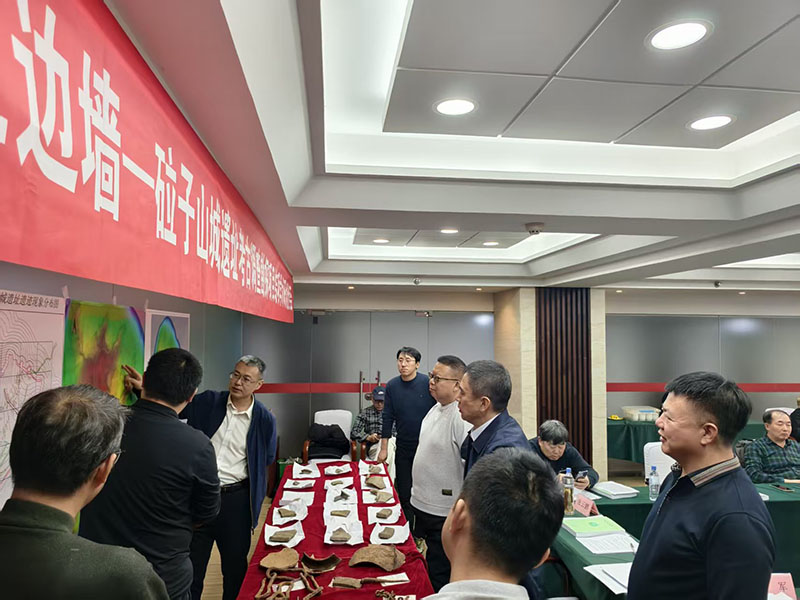
Recently, the School of Archaeology and Cultural Heritage at Liaoning University completed an archaeological survey and exploration of the Mudanjiang Border Wall—Lazi Mountain City site, commissioned by the Management Committee of Jingpohu Lake Scenic Area and Nature Reserve. The project, initiated in April 2025, covered an exploration area of approximately 170,000 square meters and achieved significant phased results regarding the city's structure, chronology, and functionality. These findings provide new archaeological evidence for understanding the historical landscape of ancient mountain cities in the Jingpohu Lake region.
The site of Lazishan Mountain Fortress is located within the Jingpohu Lake Scenic Area of Ning'an City, Heilongjiang Province. Built along the lakeside and mountains, it fully utilizes the natural terrain with walls constructed along the ridges, forming an overall plan resembling a dustpan. It is one of the most representative mountain fortress sites in the Jingpohu Lake region. In 2019, the site was designated as part of the eighth batch of National Key Cultural Relics Protection Units and incorporated into the Mudanjiang Border Wall protection system. Due to its location in densely forested mountainous terrain, understanding of its overall layout and internal structure has long been relatively limited.
This archaeological project adheres to the concept of "urban archaeology." While minimizing disturbance to the site, comprehensive methods such as low-altitude laser remote sensing, archaeological exploration, precise dating, and related scientific analyses were employed for systematic investigation. Aerial images and digital elevation models obtained through low-altitude laser remote sensing and vegetation filtering clearly reveal the paths of walls, valleys, roads, and the distribution of major relics within the fortress, providing precise guidance for subsequent ground surveys and explorations.
Archaeologists confirmed that the perimeter of Lazishan Mountain Fortress's walls measures approximately 1,770 meters. The preservation and structural features of the eastern, southern, western, and northern sections vary significantly, with some walls featuring external "horse-face" projections and the northern gate equipped with an outer defensive enclosure. A mixed earth-and-stone wall was also discovered in the low-lying valley area inside the fortress, dividing the space into inner and outer sections, reflecting a relatively complex defensive system and spatial organization.
Within the exploration area, a total of 307 various relics were discovered, including house foundations, hearths, ash pits, water reservoirs, roads, city walls, and kiln sites. The distribution of relics within the city shows distinct zoning characteristics, with the main residential areas concentrated on the sunny slopes in the western part, forming the southern, central, and northern zones. The northern zone, where tile fragments are commonly found on the surface, is believed to have been a higher-status residential area. The outer city wall encloses a relatively smaller area, but the discovery of a large courtyard relic suggests it may have served an important function during the later period of the city's use.
Notably, a group of large water reservoir relics was discovered within the city, featuring a rectangular layout with stone-built filtration facilities. This is the first time such a discovery has been made among the known mountain fortress sites in the Heilongjiang region, providing new materials for studying the water supply and living support systems of ancient mountain fortresses.
The unearthed and collected artifacts are mainly tiles, pottery fragments, and ironware. Most of the tiles are gray cloth-patterned tiles, some of which bear decorations and shapes clearly corresponding to the Balhae Kingdom period. The pottery is dominated by large rolled-rim vessels, exhibiting distinct characteristics of the Jin Dynasty. Based on dating data, archaeologists confirmed the presence of multiple cultural layers at the site, with the main period of use concentrated during the Eastern Xia Kingdom era, alongside relics from the late Balhae Kingdom and the Shunzhi period of the Qing Dynasty.
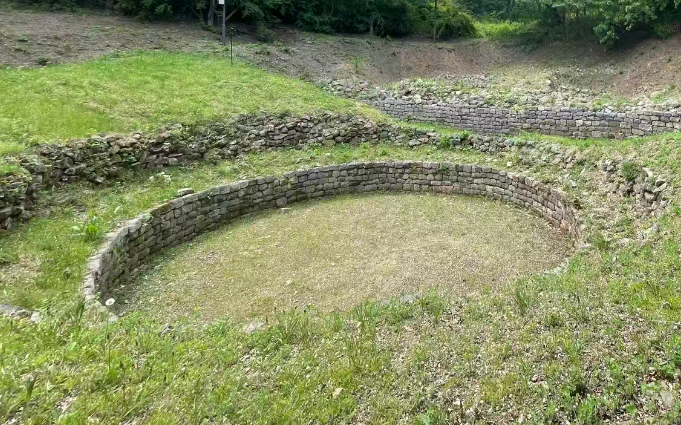
Based on the comprehensive analysis of the wall structure, relic distribution, artifact characteristics, and chronological data, it is determined that Lazishan Fortress underwent at least three major developmental stages: initially constructed and utilized during the late Bohai Kingdom period, systematically renovated and continued in use during the Dongxia Kingdom era, and finally, sporadic activities occurred after the site was abandoned.
This archaeological survey has significantly clarified the overall layout and internal structure of Lazishan Fortress on a large scale, systematically confirming for the first time its historical process of multi-period use. It provides important clues for further research into the ancient defense systems and regional history of the Heilongjiang area. The findings will also establish a scientific foundation for the protection, display, and rational utilization of the site. In the next phase, archaeological efforts will focus on targeted excavations and research in key areas to deepen the understanding of Lazishan Fortress's historical value.