March brings a journey to the south of the Yangtze, April calls for a trip to Dali, while July demands a visit to Heilongjiang.
Many tourists' first impression of Heilongjiang is of extreme cold, vast forests, and expansive black soil.
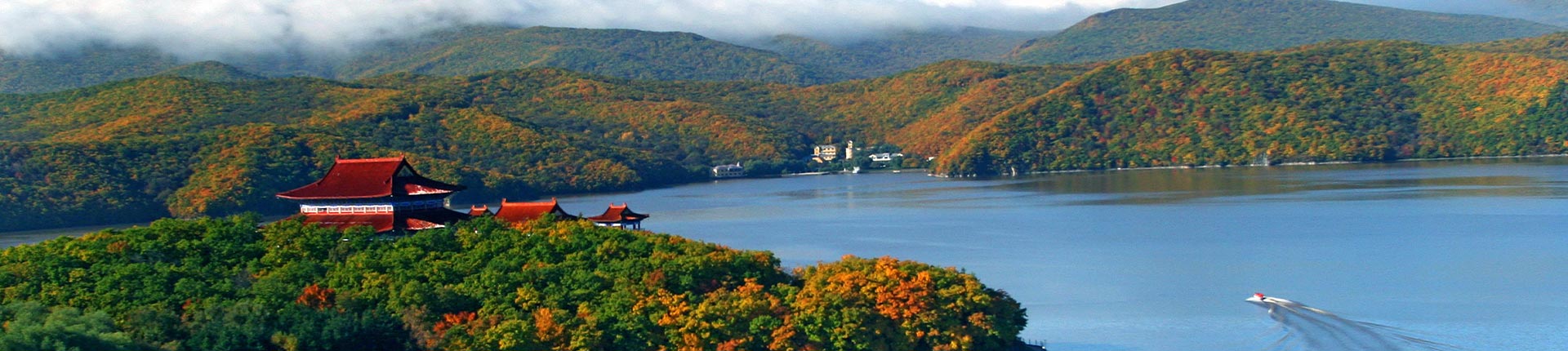
This is just the initial encounter, a misunderstanding. This sacred land of Heilongjiang Province experiences four distinct seasons - thoroughly cold yet passionately warm. Each season paints a different landscape. The layered, multicolored autumn hues of the Greater and Lesser Khingan Mountains attract world-renowned photographers to capture their beauty, truly making for an awe-inspiring travel experience.
Opening a map, we can easily see Heilongjiang's true geographical features: "five parts mountains, one part water, one part grassland, and three parts farmland." Today, let's explore this province and set the record straight.
The so-called "five mountains" refer to the Greater Khingan Mountains, Lesser Khingan Mountains, and southeastern mountain ranges - interconnected peaks forming continuous, overlapping ridges.
To dismiss Heilongjiang Province with just the phrase "a river" is far too simplistic. The mere character "river" in its name proclaims to the world its abundant waterways and flourishing rivers!
The Ming Dynasty poet Yang Shen once crossed the Heilongjiang River and, due to the rising waters during the rainy season, left behind the famous lines: "The traveler's heart races with the swift water, voices carry across the river."
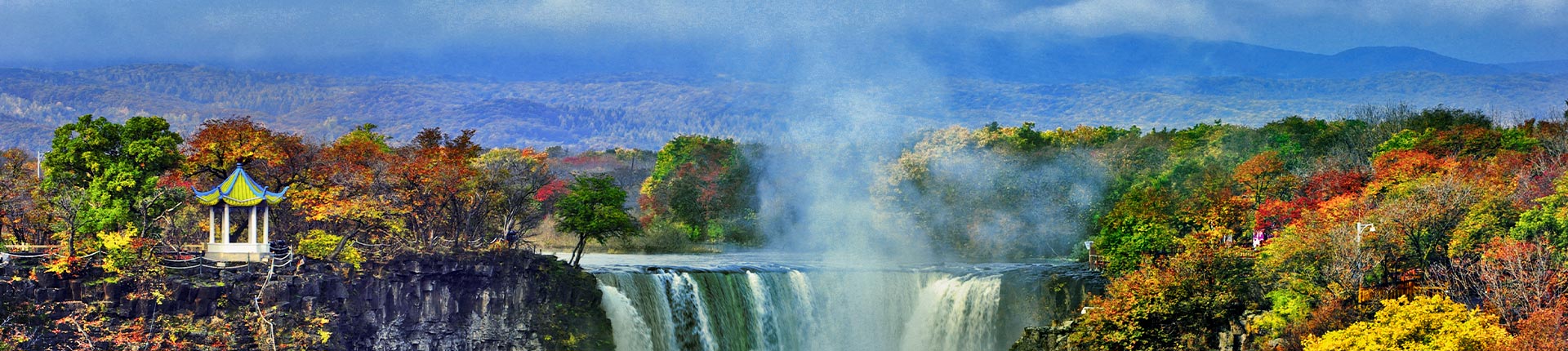
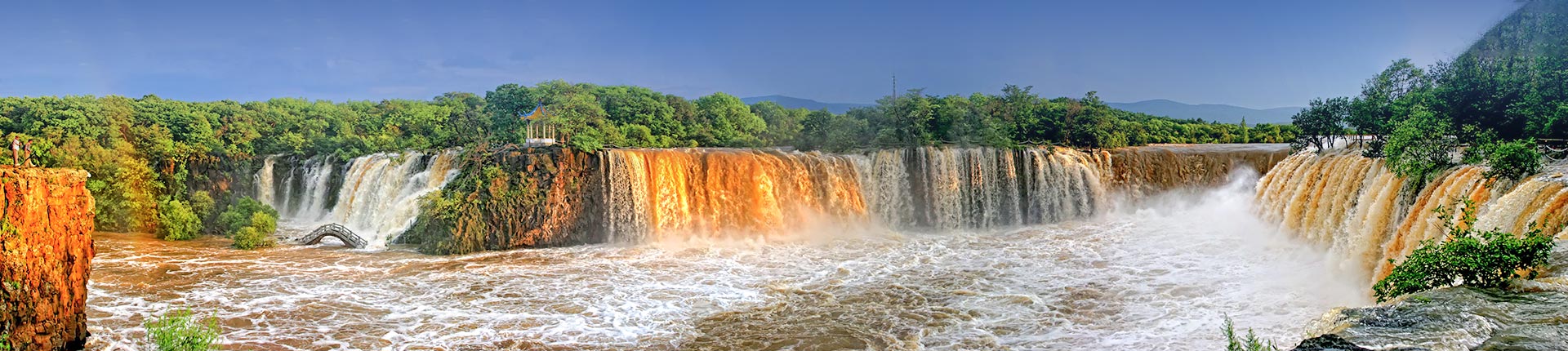
Beyond rivers, Heilongjiang is also renowned for its lakes. Many seasoned travelers say that without a few photos of Wudalianchi in autumn or the circular waterfall of Jingpohu Lake in their albums, they wouldn't dare claim to have journeyed far and wide.
Heilongjiang is too vast to explore entirely in one trip, so I had to opt for seasonal visits. That means for the current summer vacation, the best family-friendly destinations in Heilongjiang are Mudanjiang's Jingpohuand Harbin's Volga Manor and Central Street.
Must-visit summer destinations in Heilongjiang: first stop, Central Street; second stop, Jingpohu.
Ideal for tourists from geographical areas such as Hebei and Shandong.
Preparing to board at Jinan Airport
Since I live in the southern district of Jinan, I chose a Shandong Airlines flight to Harbin departing at 7:30 AM. The reason for selecting such an early flight was to arrive in Harbin as early as possible. I set off on Saturday and stayed at a hotel near Yaoqiang Airport on Friday night. Hotels around the airport provide complimentary shuttle services, which is very convenient.
The 7:30 AM flight arrived in Harbin at 9:50 AM. After disembarking, it was around 10:10 AM, and then I took a taxi directly to the Harbin Modern Hotel.
Day 1 Harbin
Opted to stay at the Modern Hotel, enjoyed the exotic charm of Central Street, watched the sunset by the Songhua River, and visited St. Sophia Cathedral.
Spending the day and evening at Harbin Central Street! Depart the next morning and head to Harbin Station to take a train to Jingpohu Lake in Mudanjiang.
First, the Modern Hotel where we stayed was built in 1906 and is located on Central Street in Daoli District, Harbin, Heilongjiang Province. At that time, the hotel was magnificent and bustling with activity. "Modern" in Russian means trendy or fashionable. In 1934, it suffered severe damage from the Japanese puppet army and began to decline. In 1946, after the liberation of Harbin, the hotel was converted into a reception center for the Northeast Bureau of the CPC Central Committee. It underwent several name changes before being restored to its original name, Modern, in 1987.
In Harbin, the name "Modern" is widely known, much like Churin, both being exotic and time-honored brands. The Modern Hotel was constructed later than Churin's business, opening its doors in 1906. It stood as one of the most luxurious multifunctional hotels in Harbin at the time, integrating dining, entertainment, and accommodation.
As advertised in the 1931 Russian edition of the "Harbin Guide," "The Modern Hotel boasts the most luxurious ballrooms and dining halls, alongside the most modern and comfortable guest rooms."
Central Avenue Keywords: Eating Moderne Ice Cream The Moderne Hotel is right on Central Avenue, where you can fully enjoy the Russian-style cultural scenery and must try a Moderne ice cream. Be sure to also have a bread made by Harbin locals and a cup of Qiulin.
Merchants like to use foreign names for their stores, but the Moderne Hotel is a genuine phonetic translation of a foreign name, and there has been debate about the meaning of its name.
Heading further north along Central Avenue, you'll reach the Harbin Songhua River waterfront, a renowned spot for watching sunsets, and the famous Harbin Flood Control Square. Here, you can also enjoy the square's musical fountain show, which performs three times daily. The sunset over the Songhua River is often considered a romantic backdrop for love and friendship.
Watching the sunset on the Songhua River, witnessing everlasting love. The Songhua River is a must-visit natural attraction in Harbin. Spanning the river is a century-old iconic bridge, while the riverside is adorned with the serene and cultural Stalin Park. This spot is also the most ideal place in Harbin to catch the sunset.
Every afternoon, visitors from all over the country gather here to enjoy the breathtaking and romantic sunset casting its glow over the Songhua River.
St. Sophia Cathedral St. Sophia CathedralAbsolutely stunning. The St. Sophia Cathedral, built in 1907, is a landmark of Harbin, with its striking green onion-shaped dome.
After watching the sunset over the Songhua River, take in the night scenery of Central Street before heading to the night view of Sophia Church.
Although this magnificent Byzantine-style building no longer serves as a church, it remains one of Harbin's most beautiful exotic structures, drawing countless visitors who come to admire its charm.
Lunch Dining - Lao Chu Jia Restaurant on Central Street
Lunch was chosen at Lao Chu Jia Restaurant on Central Street, just fifty meters away from the Moderne Hotel. This is also a popular internet-famous restaurant, attracting many local Harbin friends among its diners. Hence, those who know good food come to "dine at Lao Chu Jia!" Our family had lunch there by reservation, so we didn't have to queue.
From Harbin's @Bingcheng Xinzi, the teacher introduced the life of Lao Chu Jia Restaurant, saying that this restaurant is far more than just a dining place! The inheritor of this restaurant is already the fourth generation, pictured is the fourth-generation leader Zheng Shuguo.
It gathers the historical materials of Harbin's century-old culinary history in this flagship store. Lao Chu Jia perfectly combines Northeastern Chinese cuisine with Russian-style Western dishes.
Lao Chu Jia is one of Harbin's most renowned time-honored Northeastern Chinese cuisine restaurants, having been featured on multiple food programs by media outlets like CCTV. Their signature dish, the sweet and sour pork (Guo Bao Rou), is a must-order at every table and a celebrated recipe passed down through generations at Lao Chu Jia. Additionally, their official-style tofu, spare ribs, and sesame sauce cold noodles are all exquisite in color, aroma, and taste—not to be missed.
Signature Dishes: Beer Fish, Stir-fried Meat with Mung Bean Jelly, Kvass, Pork and Vermicelli Stew, Lion's Head (Pork Meatball), Da La Pi (Cold Jelly Dish), Milk-flavored Hand-torn Pancake, Millet Meatballs, Fried Ice Pop, Traditional Blood Sausage, Grilled Fish in Cream Sauce, Old-style Dry-fried Pork Intestines, Black Pepper Halibut Head, Whipped Spring Ox, Lion's Head, Black Pepper Halibut Head, Raw Roasted Ribs, Homestyle Cold Dish, Grape Fish, Sweet and Sour Mandarin Fish with Pine Nuts, Homestyle Cold Dish, Southern-style Fried Meatballs, Official Tofu, Tribute Rice Meatballs, Di San Xian (Stir-fried Three Delicacies), Guo Bao Rou (Sweet and Sour Pork), Beef in Fresh Sesame Sauce, and more. %% For a night dining experience, explore some local snacks on Central Street to authentically savor the lively atmosphere of Harbin.
For dinner at night, head to Central Street to try some local snacks and get a taste of Harbin's authentic local flavor.
The next day Leaving Harbin in the morning Heading to Jingpohu
The next morning, after having breakfast and taking a short rest, we checked out from the hotel and headed to Harbin Railway Station to catch the high-speed train to Jingpohu Lake in Mudanjiang.
The high-speed train ticket was D817 from Harbin to Mudanjiang, departing at 8:20 AM and arriving in Mudanjiang at 10:03 AM. Then at Mudanjiang Long-Distance Bus Station, we would take the long-distance bus to Jingpohu:
Mudanjiang - Jingpohu Lake North Gate: 1 trip per day, departure at 11:25 AM, travel time about 2.5 hours; Mudanjiang - Jingpohu Lake East Gate: 2 trips per day, departures at 1:25 PM/2:30 PM, travel time about 2 hours.
Upon arriving at Jingpohu, we checked into the Jingpohu Lake Hotel, a property directly operated by the scenic area. This hotel has hosted many celebrities, and their photographs with introductions are displayed throughout the premises.
The hotel nestles beside the ancient lake, embracing its shores and resting in tranquility. Composed of the "Serenity Garden" and the "Refreshment Garden," the former features villas within beautifully landscaped courtyards. Pavilions and towers stand elegantly amidst serene surroundings, where dense woods cascade, mountains mirror on the lake, winding paths lead to secluded spots, and a refreshing breeze delights the senses. This ensemble creates a Suzhou-style garden architectural complex.
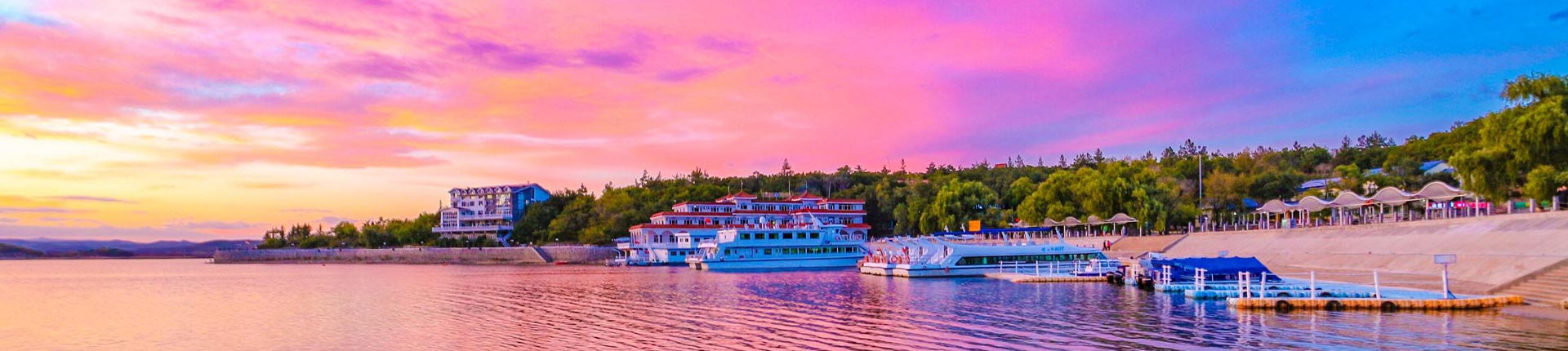
【Convenient Transportation】Located in the heart of the lake area, it is 6 kilometers from the North Gate of Jingpohu Lake and 4 kilometers from the East Gate. There is a sightseeing bus stop right in front, and the resort's boat dock is only 20 meters away. You can easily explore the scenic beauty of Jingpohu Lake on foot.
【Nearby Attractions】In front of the hotel, you can board a boat at the resort dock to cruise along the Hundred-Mile Long Lake and admire attractions like Big and Small Lone Mountains and White Stone Cliff. The hotel is just 4.5 kilometers from the Basalt Waterfall (Diaoshuilou Waterfall), and the Volcanic Crater Forest Park and Bohai Ruins are only 30 kilometers away.
【Eat, Drink, and Be Merry】Around the hotel, you'll find a variety of dining options including Dock Bar, Waterfall Coffee, Waterfall Noodle House, and Dulin Teppanyaki. Alternatively, you can dine at the Jingpohu Lake Hotel.
Main attractions of Jingpohu: 1. Diaoshuilou Waterfall
Recently, many friends have been asking about the must-visit attractions in Jingpohu Lake National Scenic Area. So, what are the must-see spots in this scenic area? This question has been raised by quite a few people. Below, we'll introduce them together.
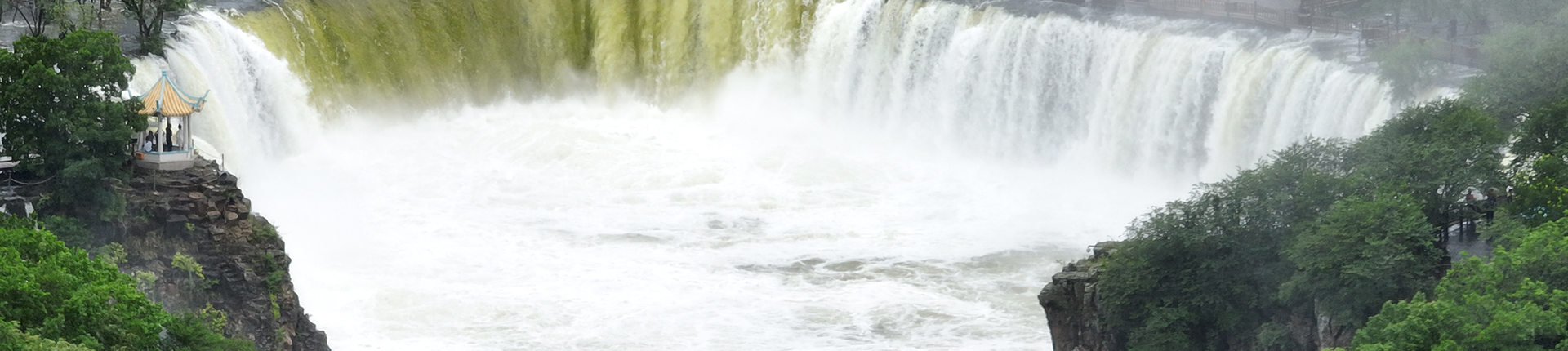
The Diaoshuilou Waterfall, located at the northern end, is a top-tier natural scenic spot (world-class) resembling the renowned Niagara Falls. During the high-water season, the waterfall typically spans 50-60 meters in width with a drop of over ten meters. However, in flood periods, the waterfall cascades in multiple streams, reaching a maximum drop of more than 20 meters and a width exceeding 400 meters. The lake water rushes from the south, west, and north directions with overwhelming force, plunging from the top of the lava cliff into the Black Dragon Pool like floating clouds and scattered snow. Mist sprays everywhere, and water droplets hit your face from a hundred meters away. It resembles the Milky Way hanging upside down, a colorful ribbon over a cliff, roaring and thundering, with sounds that can be heard ten miles away.
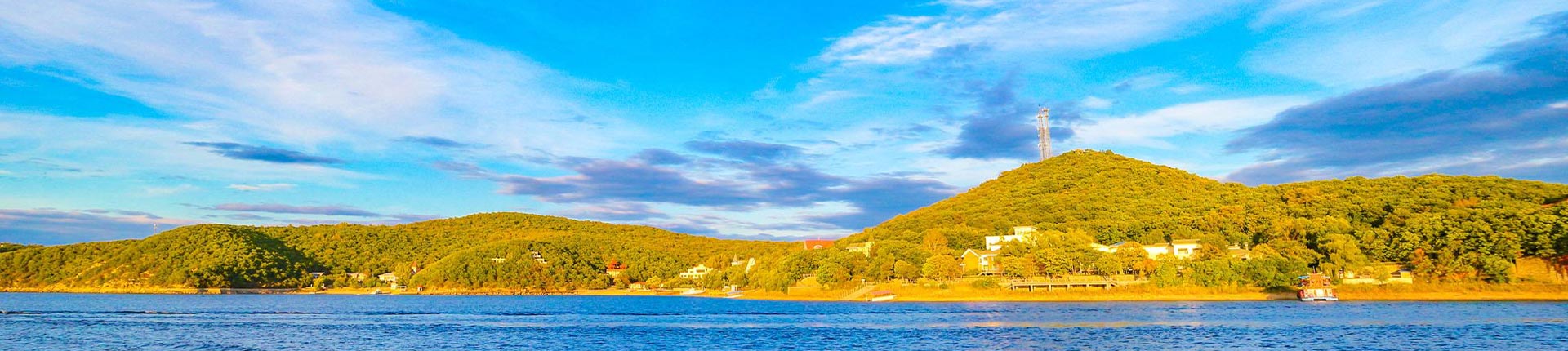
2. Hundred-Mile Long Lake The Hundred-Mile Long Lake is one of the three core scenic areas of Jingpohu Lake Scenic Area. It meanders in an "S" shape and is divided into four parts: North Lake, Middle Lake, South Lake, and Upper Lake. Stretching 45 kilometers (approximately 100 Chinese miles) in length, it is thus called the Hundred-Mile Long Lake. With a water area of 79 square kilometers, Jingpohu Lake is the world's largest volcanic lava-dammed lake. Formed around 10,000 years ago after five volcanic eruptions, the lava blocked the ancient riverbed of the Mudan River, creating a natural lava dam and giving rise to the early Jingpohu. The lake boasts numerous first-class (national-level) natural scenic spots, including White Stone Cliff, Big Solitary Hill, Small Solitary Hill, Pearl Gate, Taoist Mountain, and Crow Cliff.
3. Maogong Mountain Mao Gong Mountain is located on the eastern side of Laohei Mountain, facing the Leaders' Building of Jingpohu Lake Villa across the lake. It is a first-class natural scenic spot (national level) in the Jingpohu Lake scenic area. The landscape consists of two mountain ranges, with an elevation of 824.4 meters. Its shape strikingly resembles Comrade Mao Zedong lying in repose at the "Memorial Hall," stretching 4,000 meters in length, with distinct facial features and well-proportioned body parts.
4. Volcanic Crater
The Jingpohu Lake Volcano is located about 50 kilometers northwest of Jingpohu Lake in Heilongjiang, deep in the mountainous area at an altitude of 1,000 meters in the Zhangguangcai Mountains. Thirteen well-preserved volcanic craters can be observed. From the inner walls of the craters, it can be seen that the volcanic activity alternated between eruptions and overflows. The area features well-developed lava tunnels.
The volcanic eruption blocked the Mudan River, forming China's largest volcanic barrier lake—Jingpohu. Within a radius of 20 kilometers, seven craters with steep inner walls and varied shapes are connected together. Between Crater No. 3 and Crater No. 4, they are linked by a lava tunnel.
The Jingpohu Lake Volcano is a dormant volcano that has erupted. After millions of years of geological changes, it has transformed into a sunken primeval forest belt, hence the name "Crater Primeval Forest." 5. The newly added evening performances are spectacular Jingpohu's night program features a variety of shows, including iron flower displays, Hanfu dances, stage plays, and interactive disco with the audience.
It is recommended to stay for two nights at Jingpohu. You can watch the sunrise and sunset, and enjoy the evening performances.
Return plan: There are no direct flights from Mudanjiang to Jinan Yaoqiang Airport; a transfer is required. There are two options to return to Jinan. If you prefer not to transfer, you can return to Harbin Taiping Airport and then fly back to Jinan from there.