Push Open the Door to History, Embark on a Fantastic Journey
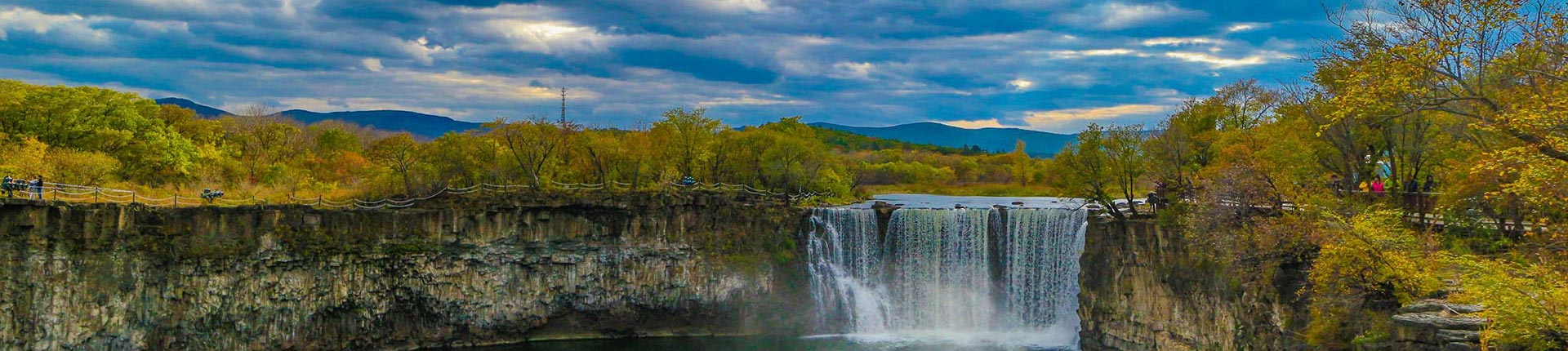
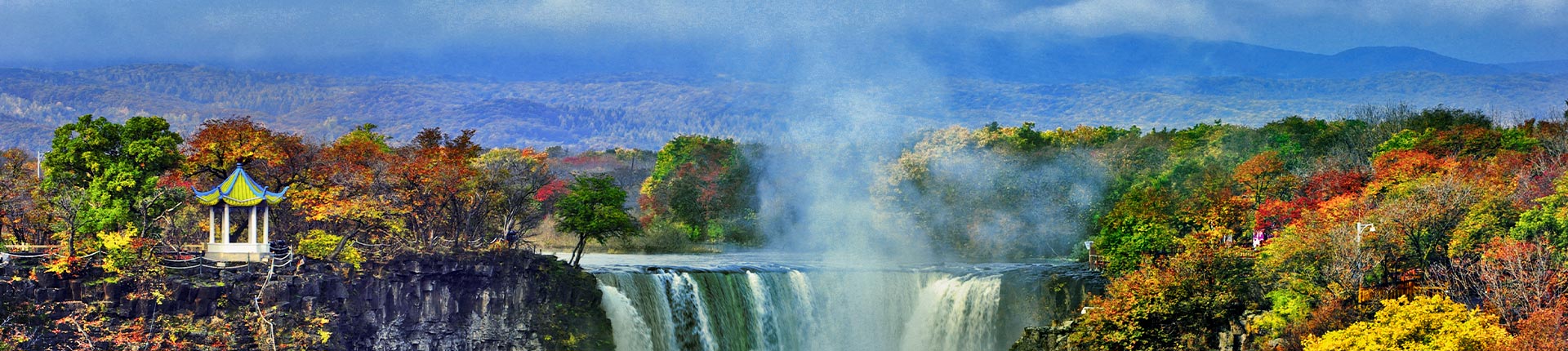
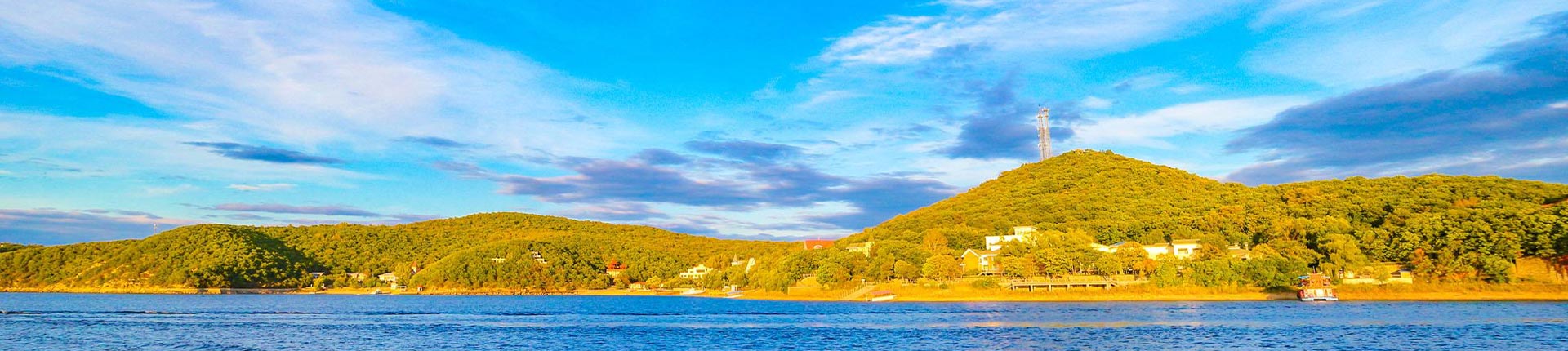
Jingpo Lake is never just about its beautiful lakes and mountains…
When ten-thousand-year-old volcanoes have settled into dark rocks, and the legacy of the millennium-old Bohai Kingdom flows along the lakeshore, this land is not merely a gift of nature, but also a treasure trove of civilization without walls.
Today, more and more travelers are “visiting museums with their families” along their journeys. People are trying to push open the door to history, touch the marks of nature, and engage in dialogue with human wisdom. “Study tours” are no longer abstract concepts in textbooks, nor exclusive to students. They have become a fashionable new way of traveling—a “walking classroom.”
Jingpo Lake is exactly such a place that takes the beauty of mountains and rivers as its materials and millennia of culture as its teacher:
Starting from this issue, we will successively take you into another wonderful world of Jingpo Lake:
“Jingpo Lake • Museum Cluster” – leading you into 10 treasure halls, wandering through the rings of geological time, touching the texture of volcanic rocks, listening to the echoes of ancient Bohai music, appreciating the integration of multi-ethnic cultures, and witnessing the inheritance of the revolutionary spirit.
May every stop become a discovery; may every gaze open a dialogue spanning ten thousand years…
01 Jingpo Lake History and Culture Exhibition Hall
02 Jingpo Lake Ancient Musical Instruments Exhibition Hall of the Mudanjiang River Basin
03 Jingpo Lake Butterfly Museum
04 Jingpo Lake Red Memory Exhibition Hall
05 Jingpo Lake Coin Collection Hall
06 Jingpo Lake National Defense Education Exhibition Hall
07 Liu Shaoqi Wooden House
08 Ningguta Exile Culture Exhibition Hall
09 Jingpo Lake Stamp Museum10 Jingpo Lake Global Geopark Museum
Located at the North Gate of the Jingpo Lake Scenic Area, the Jingpo Lake History and Culture Exhibition Hall covers a total area of 912 square meters. It is a comprehensive exhibition hall that focuses on displaying the historical and cultural context of the Jingpo Lake basin and the revolutionary struggle history of the Communist Party of China in this region.
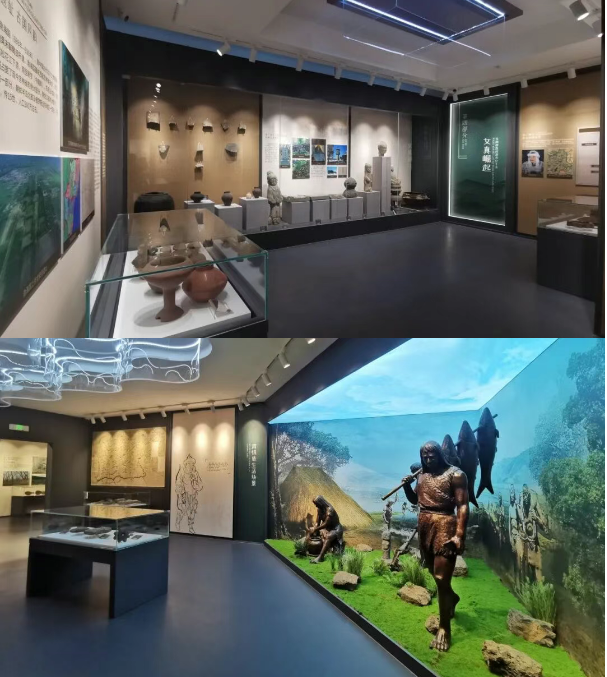
Through physical exhibits, pictures and sculptures, the hall narrates the glorious history of Jingpo Lake from the Stone Age to the victory of the War to Resist U.S. Aggression and Aid Korea, demonstrating and witnessing the continuous inheritance of civilization in the Jingpo Lake basin.
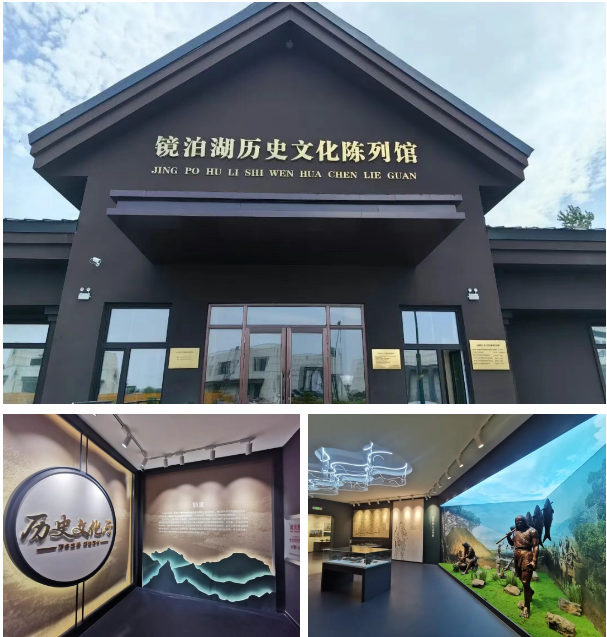
From the Jingpo Lake Shore Site, buried underground for 50,000 years, archaeologists have discovered semi-underground caves where ancient people lived, along with various stone tools they used in daily life.
The pictures and artifacts displayed in the exhibition hall truly reproduce the survival wisdom of prehistoric humans, revising the commonly accepted view that ancient legends such as "Yu the Great Tames the Flood" and "The Three Sovereigns and Five Emperors" represent the only oral history of the Stone Age.
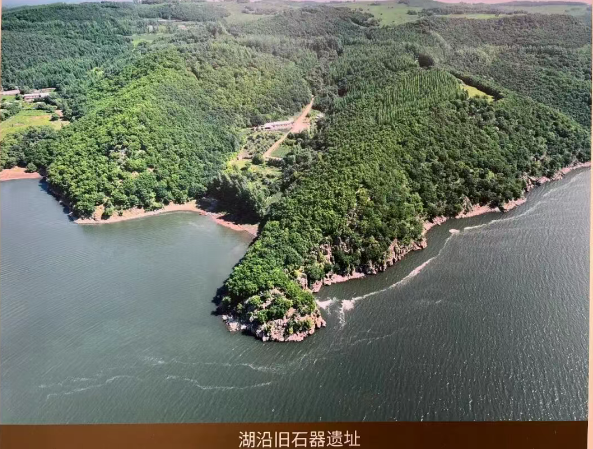
Since the 1950s, more than 40 Paleolithic sites have been discovered in the northern part of Northeast China. Among the Paleolithic sites found around Jingpo Lake, the Huyan Site is the most representative.
The Huyan Site is situated on the lakeside terrace to the west of Huyantun Village in the middle section of Jingpo Lake. A wide variety of stone tools have been unearthed there, among which the hand axe was discovered for the first time in Heilongjiang Province.
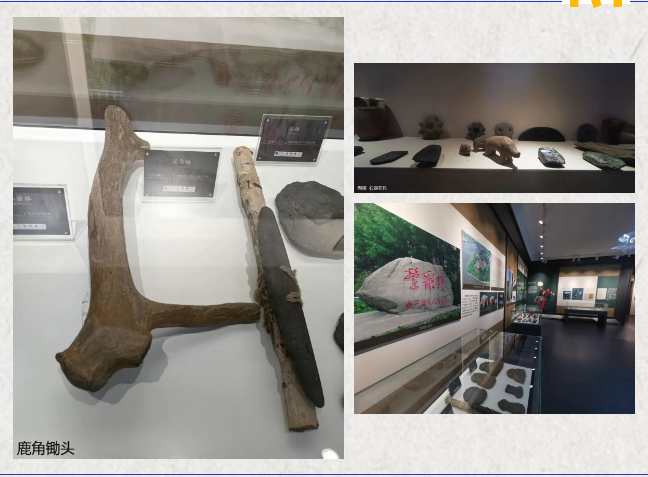
Approximately 3,000 years ago, a fishing and hunting tribe thrived on a peninsula about 2,000 meters from Nanhutou Village at Jingpo Lake. They were the Sushen people, the earliest ancestors in Northeast China, and this place is known as the Yinggeling Site.
Since the 1930s, Chinese and foreign scholars as well as archaeological experts have successively conducted surveys and excavations at the site, unearthing a large number of chipped and polished stone agricultural tools as well as hand-made pottery.
Among the finds, the antler hoe—the first farming hoe made of antler discovered in Heilongjiang—is hailed as the "First Hoe of Heilongjiang".
Complete pottery animal figurines were also unearthed here, all hand-kneaded, with some still bearing clear fingerprints of ancient people on their surfaces. Featuring vivid and lifelike shapes, they are regarded as precious works of art.
No account of ancient times is complete without the Sushen people, and no story of the prosperous Tang Dynasty can exclude the Bohai Kingdom.
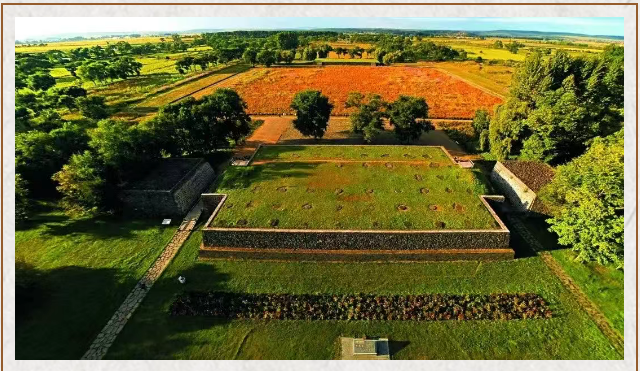
In the vast historical river of Jingpo Lake, its most glorious era belongs to the Bohai Kingdom—a local ethnic regime established by the Mohe people of Sumo and enfeoffed by the Tang Dynasty.
From the late 7th century to the early 10th century, this mysterious ancient kingdom, which existed for 229 years, fostered a developed ethnic economy and a splendid Bohai culture in the Jingpo Lake basin.
Although the ancient Bohai Kingdom has long perished, wandering among the broken walls of the former Upper Capital Longquan Mansion of the Bohai Kingdom, one can still seem to hear the hustle and bustle of carriages and horses from the "Prosperous Kingdom East of the Sea" 1,300 years ago, and feel the elegance and prosperity of the glorious Tang Dynasty.
In modern times, the Jingpo Lake basin was one of the major base areas and guerrilla zones for the War of Resistance against Japanese Aggression in Northeast China. It gave birth to many generals of the Northeast Anti-Japanese United Army and occupied an important position in the history of the Army's development.
A visit to the Jingpo Lake History and Culture Exhibition Hall allows one to deeply comprehend that magnificent, arduous yet glorious red chapter and draw spiritual strength to forge ahead.
After the founding of the People's Republic of China, the Party and state leaders paid special attention to Jingpo Lake. Since the 1960s, more than a hundred Party and state leaders have successively come to Jingpo Lake to inspect and guide the work, leaving a wealth of great footprints.
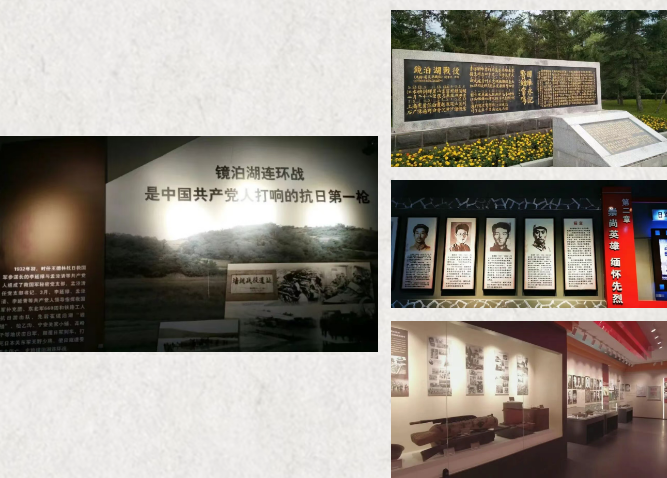
The Jingpo Lake History and Culture Exhibition Hall is not only an ecological treasure house that bears witness to the geological changes in the Jingpo Lake basin, but also a three-dimensional historical book that records the legends of the northern land.
If you wish to gain a deeper understanding of this landscape and comprehend the epic of Earth and civilization, welcome to the Jingpo Lake History and Culture Exhibition Hall!