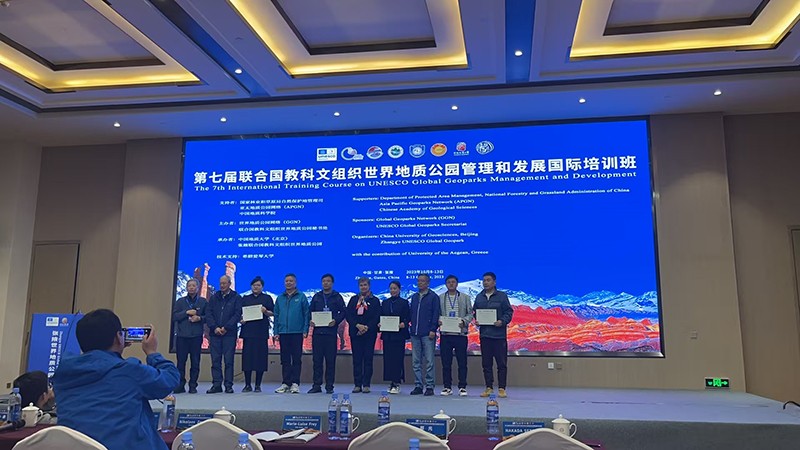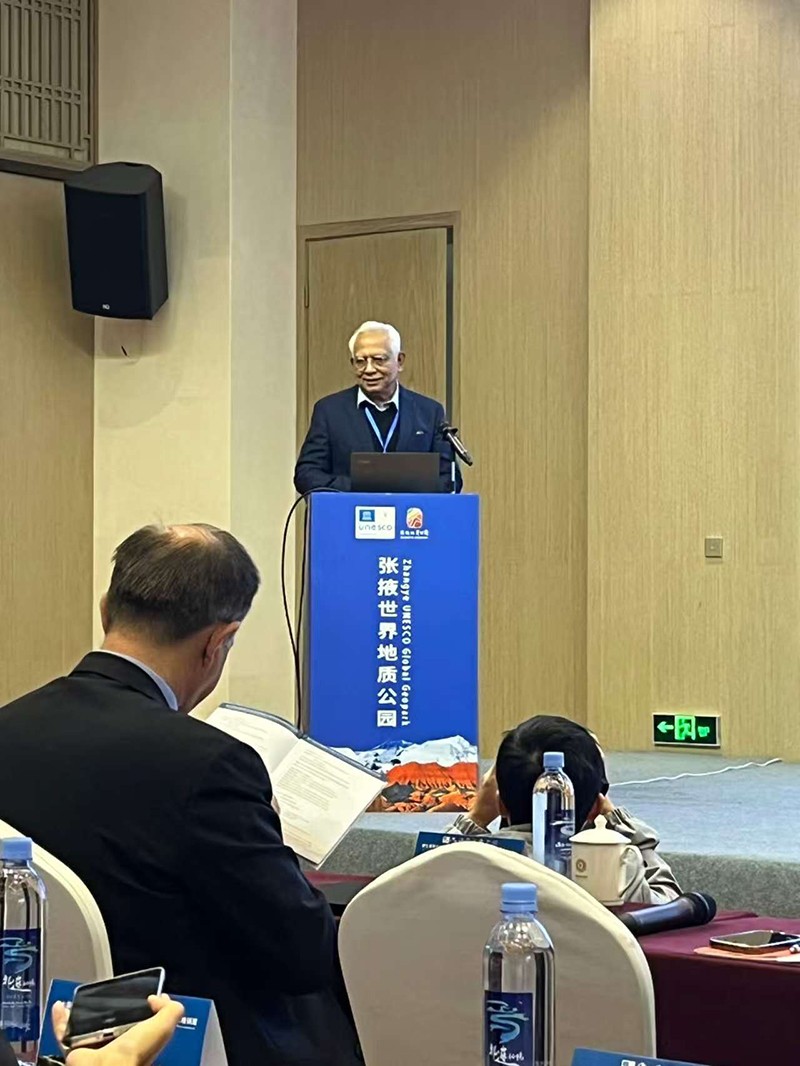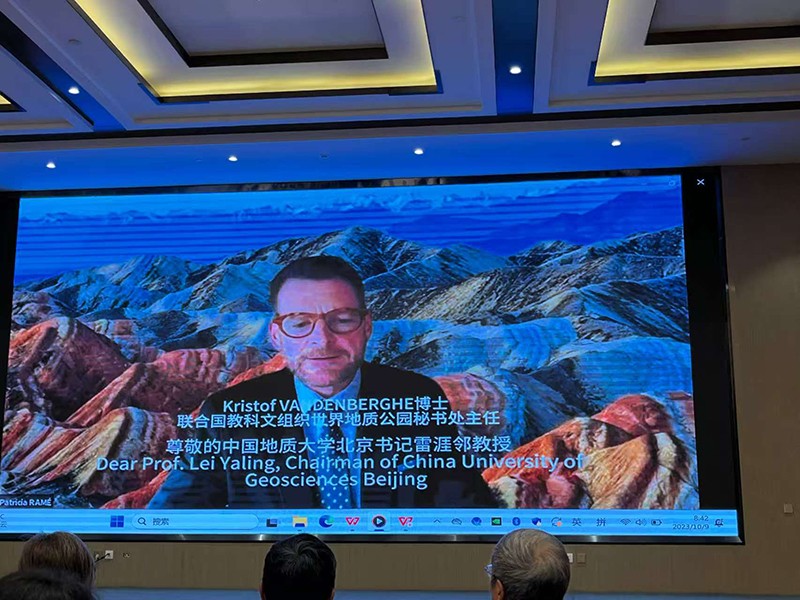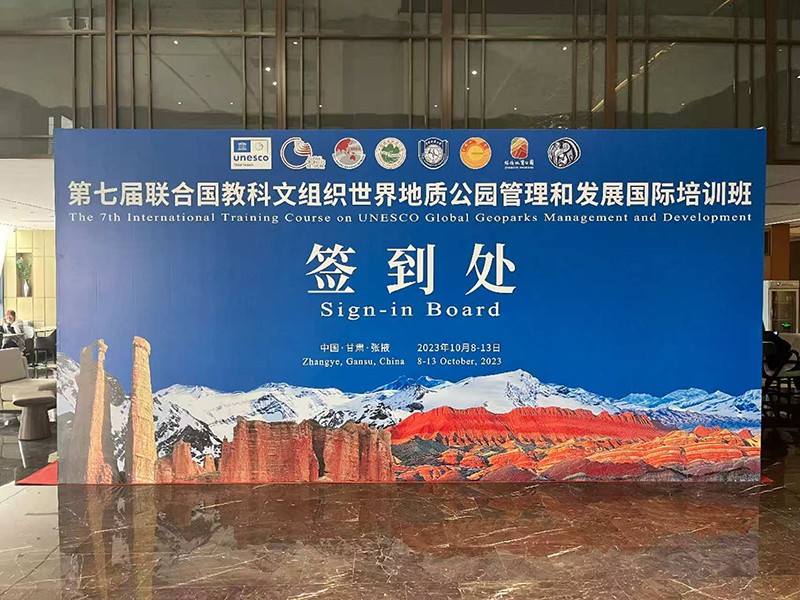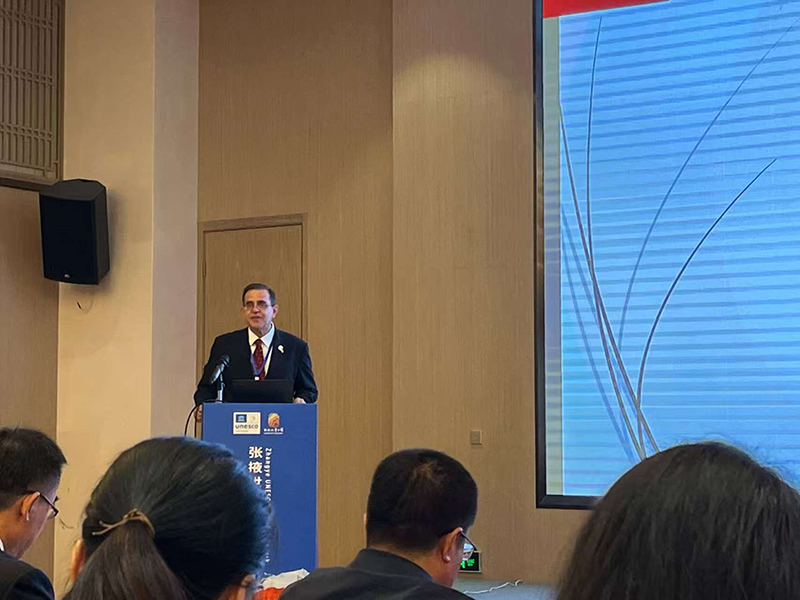
From October 8 to 13, participated in the UNESCO International Training Course on Management and Development of Global Geoparks at Zhangye UNESCO Global Geopark in Gansu Province, studying topics such as the construction, management, application, and evaluation of global geoparks, and took part in field trips to enhance the understanding of the brand connotation and operational management of global geoparks.
1. Basic Information
(1) Introduction to Zhangye UNESCO Global Geopark
The Zhangye UNESCO Global Geopark is located in Zhangye City, Gansu Province, covering an area of 1289.71 square kilometers. It primarily includes scenic areas such as the Colorful Hills, Binggou Danxia, Yugur Folk Customs Corridor, and Jiugequan. It is the only composite area in China featuring both Danxia landform and colorful hilly landscapes. The geopark integrates scientific research, popular science education, tourism, historical culture, ethnic customs, and geological heritage protection. It was successfully designated as a UNESCO Global Geopark in 2019. In 2023, the park's ticket revenue is expected to exceed 200 million yuan.
(2) Brief Introduction to the Training Course
Since 2016, the UNESCO Global Geopark Training Course has been successfully held for six sessions, and has become a highly important international capacity-building activity for UNESCO Global Geoparks, playing a positive role in the management and sustainable development of many geoparks. Unfortunately, due to the COVID-19 pandemic, the training course was not held as scheduled in 2021 and 2022. This edition of the training course was co-organized by China University of Geosciences (Beijing) and Zhangye UNESCO Global Geopark, with strong support from the Department of Protected Area Management of the National Forestry and Grassland Administration, the Global Geoparks Network (GGN), the UNESCO Global Geoparks Secretariat, the Asia Pacific Geoparks Network (APGN), and the Chinese Academy of Geological Sciences. Centered on the theme of exploring the connections between geological heritage, nature, biodiversity, and cultural heritage, the training course featured four days of lectures and exchanges, as well as a one-day field trip, covering topics such as the construction, management, application, and evaluation of global geoparks, aiming to help geopark practitioners better understand the UNESCO Global Geopark concept. Over 160 geopark practitioners participated in the event.
3) Training course instructors
The training course teaching team is composed of authoritative experts in the field of international and domestic UNESCO Global Geoparks:
Nicolas Zouros, President of the Global Geoparks Network, Council Member of UNESCO Global Geoparks, and Professor at the University of the Aegean, Greece;
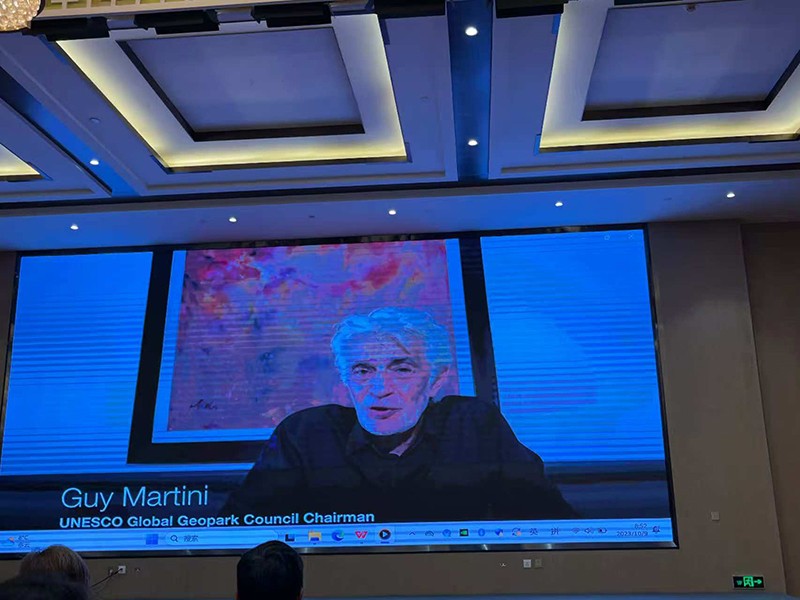
Dr. Guy Martini, Chairman of the UNESCO Global Geoparks Council and Secretary-General of the Global Geoparks Network
Researcher Jin Xiaochi from the Institute of Geology, Chinese Academy of Geological Sciences, Vice Chairman of the Global Geoparks Network and Coordinator of the Asia-Pacific Geoparks Network;
Professor Tetsuya Nakada, Vice Chair of the UNESCO Global Geoparks Council and Chair of the Global Geoparks Network Advisory Committee, Japan Geoparks Network;
Vice President of the Global Geoparks Network and Deputy Coordinator of the Asia Pacific Geoparks Network, Professor Iblahim Komoo from the National University of Malaysia;
Member of the Global Geoparks Network Executive Bureau and Professor Zhang Jianping from China University of Geosciences (Beijing);
Dr. Marie-Luise Frey, member of the UNESCO Global Geoparks Council and the Executive Bureau of the Global Geoparks Network.
Geopark expert, Professor Tian Mingzhong from China University of Geosciences (Beijing);
Geopark expert, Professor Wu Fadong from China University of Geosciences (Beijing);
Senior evaluator of UNESCO Global Geoparks and coordinator of China Geopark Network Zheng Yuan;
2. Main Training Content
The training topics include: UNESCO Global Geopark establishment and management; UNESCO Global Geopark nomination; linkages between geoheritage, nature, biodiversity and cultural heritage; operation and activities of UNESCO Global Geoparks; case studies of global geoparks; field trip to Zhangye UNESCO Global Geopark.
1. World Geoparks Construction and Management. It primarily covers the current status and management of UNESCO Global Geoparks, including concepts and operations, structure, activities, partnerships, and future prospects.
The second is the application for a UNESCO Global Geopark. It mainly introduces the key factors for a successful application and the standards of UNESCO Global Geoparks.
The third is the connection between geological heritage, nature, biodiversity, and cultural heritage. It mainly introduces the role of geoscientists in geopark management institutions, disaster reduction and management in global geoparks, activities of the China UNESCO Global Geopark Network, and network cooperation.
Fourth is the operation and activities of global geoparks. It mainly introduces geoscientific research and geological heritage evaluation within geoparks, an overview of the Japan Geopark Network, preparation for geopark application assessments, and field investigations.
Fifth, case studies on the development of UNESCO Global Geoparks. During the training session, representatives from geoparks across China, including Xiangxi, Hong Kong, Zhangye, Alxa, Shilin, and Longyan, shared their experiences in park construction, conservation, and development.
Sixth, conducted a field visit to the Zhangye UNESCO Global Geopark. The visit included the geopark's main monument, visitor center, big data center, the Colorful Danxia Scenic Area, the Wanxiang Earth Forest Valley Scenic Area, and the valley light show performance "Ala Ragda."
3. Experience and Insights
During the training session at the Zhangye UNESCO Global Geopark, we conducted on-site inspections of various attractions, including the scenic area entrance, the geopark's main monument, the tourist service center, Danxia Town, and the colorful hills of Wanxiang Earth Forest Valley. Based on the actual conditions of Jingpohu, the experiences and insights gained are summarized as follows.
(1) Developing nighttime tourism projects
Zhangye UNESCO Global Geopark has launched the Night Tour Project in the Wanxiang Earth Forest Valley. The valley, featuring typical Danxia landforms, uses light projection technology at night to display images such as "Giant Fish," "Lion and Tiger," "Yin and Yang," "Myriad Creatures," and "Seven Sages of the Valley" on its rock walls, creating a dazzling light show. In the open area of the Earth Forest Valley, a nightly immersive fantasy valley light show titled "Alan Ragda" is performed, centered around music, digital performances, and interactive lighting. Based on the folklore of the Yugur people, unique to Gansu Province, the show integrates sound, light, and projection technologies to blend local culture with natural landscapes, offering visitors a captivating interactive experience.
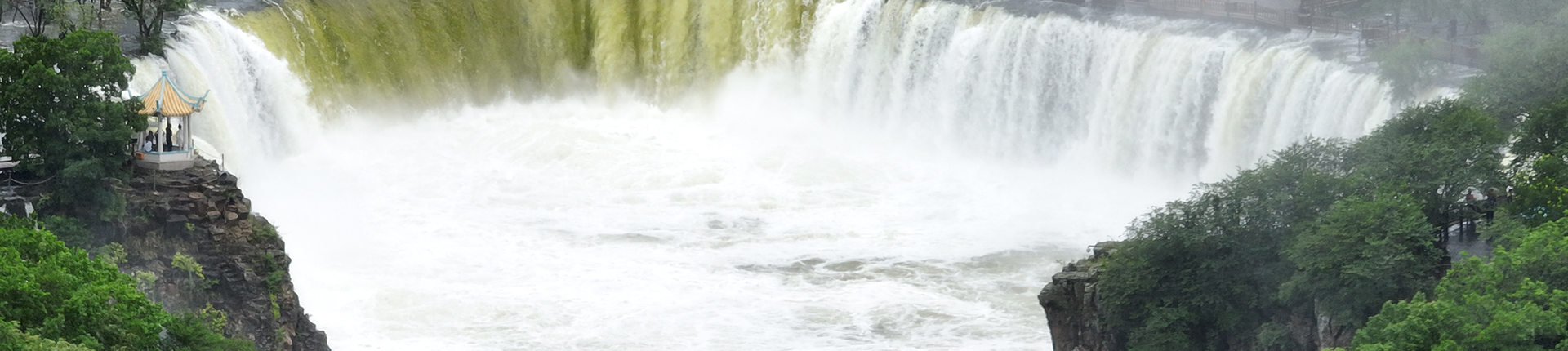
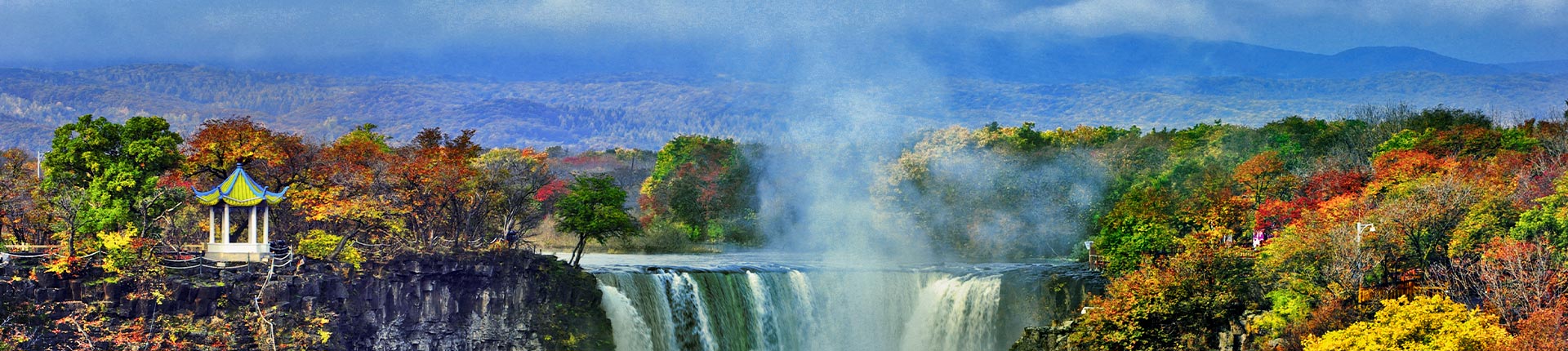
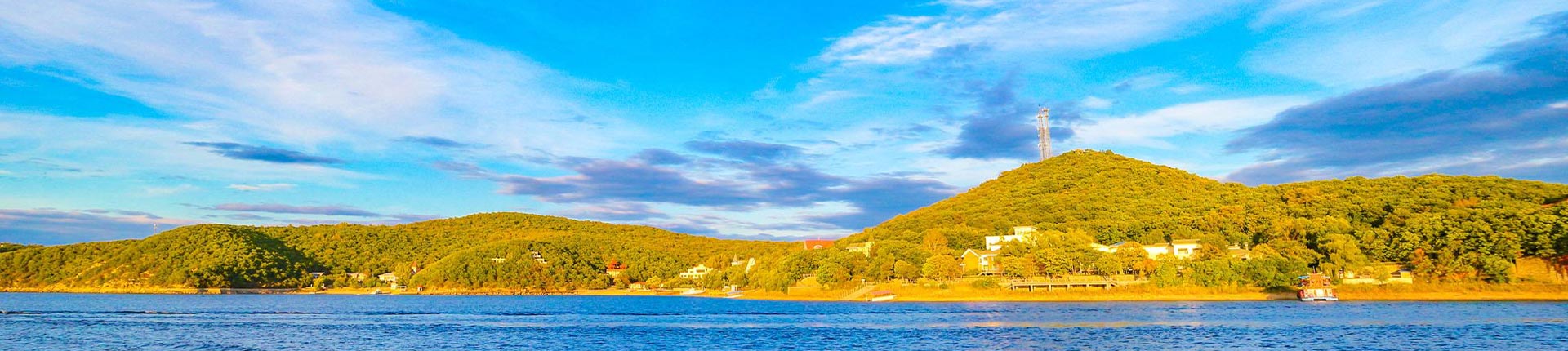
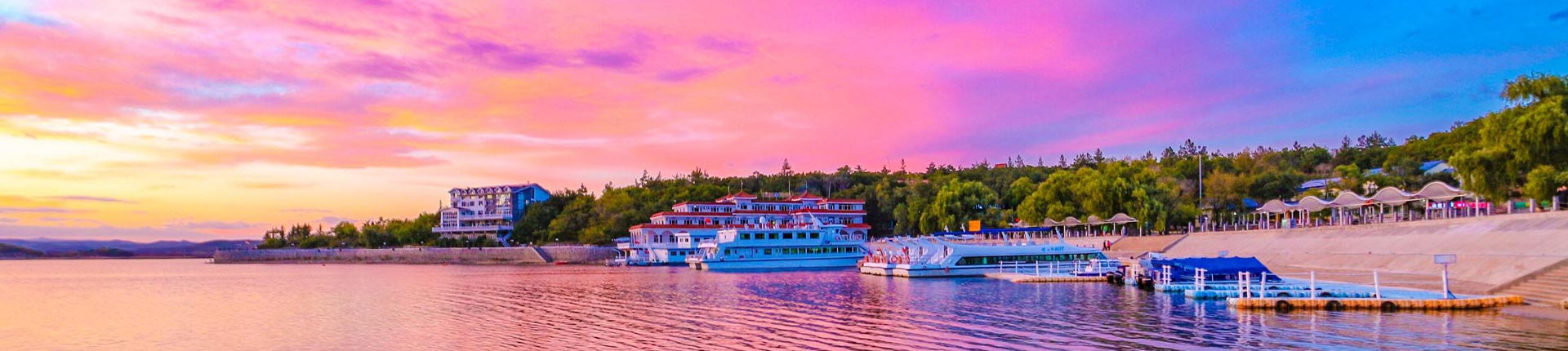
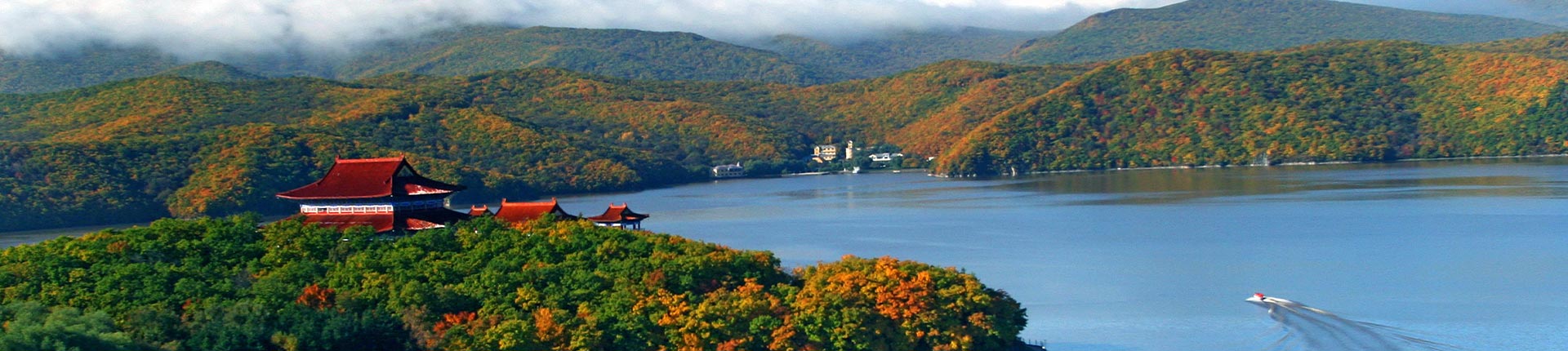
The Jingpohu Lake Scenic Area launched the "Impressions of Bohai Kingdom: Prosperous Haidong" music festival and a night market project this summer, enhancing its appeal to visitors. Drawing from the experience of Zhangye UNESCO Global Geopark, it could further develop nighttime tourism by integrating technologies like lighting and projection with local cultural elements such as the Bohai Kingdom, the Red Silk Maiden legend, and fishing-hunting traditions, thereby strengthening its nighttime tourism brand and visitor retention.
(2) Enhancing tourism accommodation and catering services
At the entrance of Zhangye UNESCO Global Geopark, the Danxia Town was built, featuring dozens of distinctive restaurants and small-to-medium-sized hotels. The architectural style and main color scheme of the town harmonize with the surrounding environment. Upon arrival, visitors can check into Danxia Town immediately and then explore the scenic area with ease. Meanwhile, no hotels or lodgings are set up inside the park, creating space for developing unique tourism projects. By promoting centralized accommodation and dining, Zhangye UNESCO Global Geopark has increased both the visitor stay rate and tourism revenue.
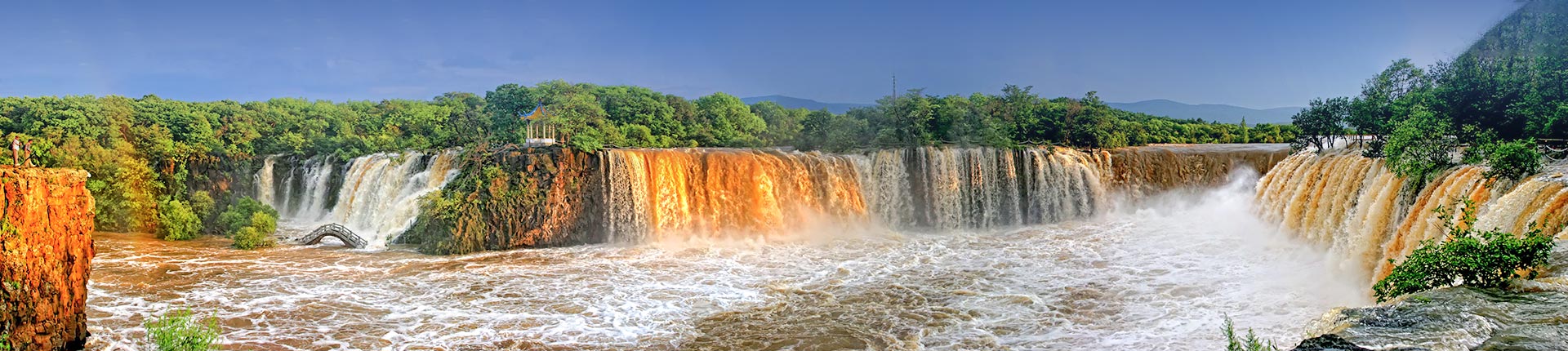
Considering the actual situation of Jingpohu, we can gradually enhance the tourism reception capacity of Beimen Waterfall Village, create a distinctive tourism service area, increase the proportion of overnight visitors, and reverse the current situation where one-day trips dominate and the scenic area struggles to retain visitors.
(3) Enhancing the storytelling capability of tourist attractions
Zhangye UNESCO Global Geopark excels at "telling stories" through its natural landscapes. By leveraging the diverse and picturesque Danxia landforms, the park imaginatively interprets naturally formed rock outlines as specific shapes like figures and animals, such as "The Old Turtle Asking for Longevity," "The Drunken Poet Immortal," "The Lion King," and "Bo Ya Playing the Guqin," transforming the earthen forest valleys into tourist attractions.
Jingpohu Lake boasts picturesque scenery and a vast expanse. Drawing from the experience of Zhangye Danxia Scenic Area, efforts should be made to enhance storytelling capabilities, develop unique natural landscapes like the Thousand Buddha Cliff, and expand tourism offerings. Meanwhile, within existing scenic areas, narratives about the Balhae Kingdom, the Red Silk Maiden, and fishing-hunting culture should be effectively conveyed to enrich the cultural depth of the sites and better attract domestic and international tourists.
After this 5-day training course, it has significantly strengthened the connection between Jingpohu Lake UNESCO Global Geopark and both the UNESCO Global Geoparks Network and domestic global geoparks. The course provided valuable knowledge on geopark management, development, and evaluation, offering excellent experience for our committee to enhance the brand-building capacity of global geoparks.