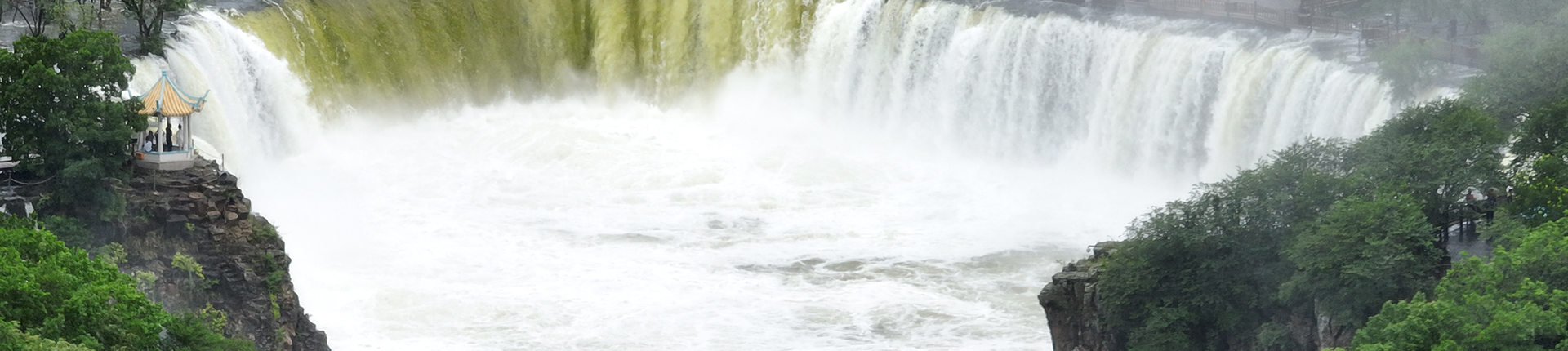





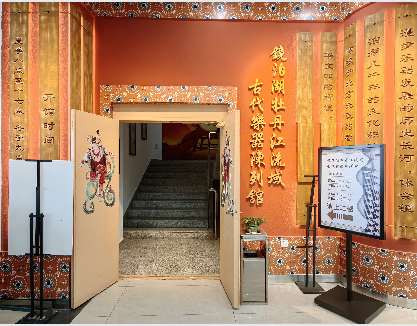
The Ancient Musical Instruments Exhibition Hall of the Jingpo Lake and Mudan River Basin is rooted in regional archaeological heritage, delving deeply into the millennia-old musical traditions of the Mudan River Basin. Guided by the development philosophy of "shaping tourism through culture and showcasing culture through tourism," it brings ancient musical relics, silent for centuries, to life, narrating the profound heritage of Chinese civilization and highlighting the unique cultural charm of traditional Chinese music—its inclusiveness and enduring legacy.
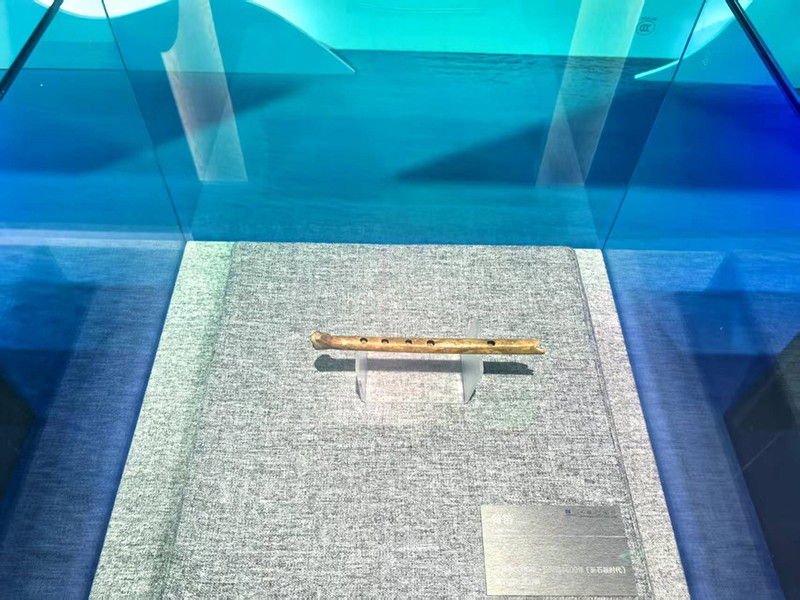
The pavilion uses unearthed artifacts as a medium to narrate the long-standing musical history of Jingpo Lake. By the lake, the touching legend of the fishergirl Hongluo playing a jade flute has been passed down. The collection includes a bone flute dating back approximately 7,000 years and a Neolithic eagle bone flute from at least 3,500 years ago. Crafted from avian and mammalian bones, these flutes underwent meticulous calculation and exquisite design before completion, reflecting the abundant material life and mature musical civilization of ancient inhabitants in this land. Also displayed are intricately carved stone flutes, such as the stone pig flute and stone eagle flute, which inherit dragon-phoenix totemic imagery and served as vital ceremonial vessels for ancient rituals honoring heaven and earth.
In the exhibition hall, ancient instruments like the xun, which originated in the Neolithic Age and are still in use today, are also displayed. The now widely popular ocarina evolved from the xun. The museum simultaneously exhibits tools such as drilling equipment used in ancient times for instrument-making, corroborating with the relics of the Sushen royal city. This site belongs to the matrilineal clan society, preserving the primitive fertility worship of early ancestors and also serving as evidence that early music initially served the ruling elite.
The museum systematically outlines the four major developmental stages of ancient Chinese musical instruments: In ancient times, instruments were crafted from natural materials and shaped on-site. The pre-Qin period marked the first peak of instrument development, with the bianzhong gaining eternal fame as a key ritual instrument. During the Qin, Han, Sui, and Tang dynasties, the blending of diverse ethnic cultures and foreign civilizations led to unprecedented prosperity in musical art, exemplified by the Liyuan, an official institution established in the Tang Dynasty dedicated to the study and transmission of music. From the Song, Yuan, Ming, to Qing dynasties, music transitioned from the imperial court to the streets, and opera emerged as the mainstream of musical development.
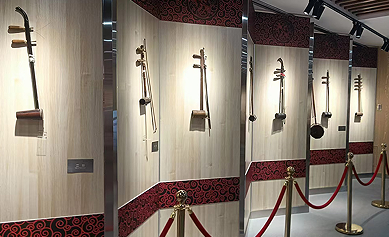
Here, you can explore the evolutionary origins of the guqin, se, and guzheng, appreciate the aesthetic charm of the Chinese pentatonic scale—gong, shang, jue, zhi, and yu—trace the ancient Eastern wisdom behind the twelve-tone equal temperament, and relive the timeless tale of friendship between Bo Ya and Zhong Ziqi in "High Mountains and Flowing Water."
The collection showcases a rich variety of huqin family instruments, including the sihu, banhu, erhu, gaohu, and jinghu, as well as the modern reformed and created folk bass instrument, the gehu, offering a comprehensive view of the diverse styles that emerged after the huqin spread to the Central Plains. Also displayed are the Buddhist auspicious conch shell, one of the Eight Auspicious Symbols, and a Tang Dynasty bronze nao, which bears witness to the historical phrase "to beat the gong and recall the troops." Additionally, early modern records are exhibited, revealing the fascinating influence of this ancient recording technology on the duration of later songs.
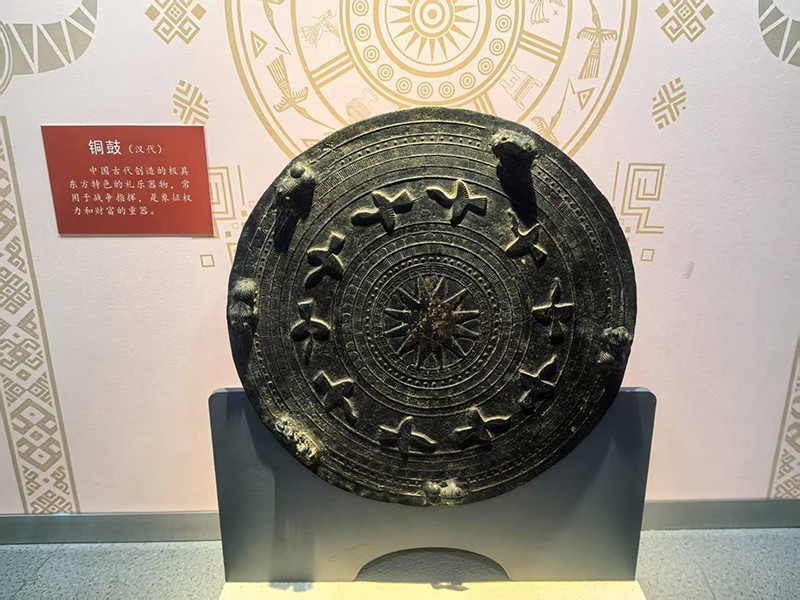
The centerpiece of the exhibition hall is an ancient bronze drum unearthed in Bohai Town. Originally a highly representative ceremonial instrument of the southern regions, the drum’s surface is engraved with sun patterns, cloud-and-thunder motifs, frog designs, and flying egret patterns, embodying the ancestors' aspirations for agricultural abundance and auspicious blessings. It is speculated that this artifact was likely left behind by the nobility of the Bohai Kingdom.
Across the vast river of time, ancient musical instruments stand as tangible relics engraved with history and as audible chronicles resonating through millennia. We cordially invite you to explore the Mirror Lake and Mudan River Basin Ancient Musical Instruments Exhibition Hall, immersing yourself in the profound and splendid musical culture of the Chinese nation.