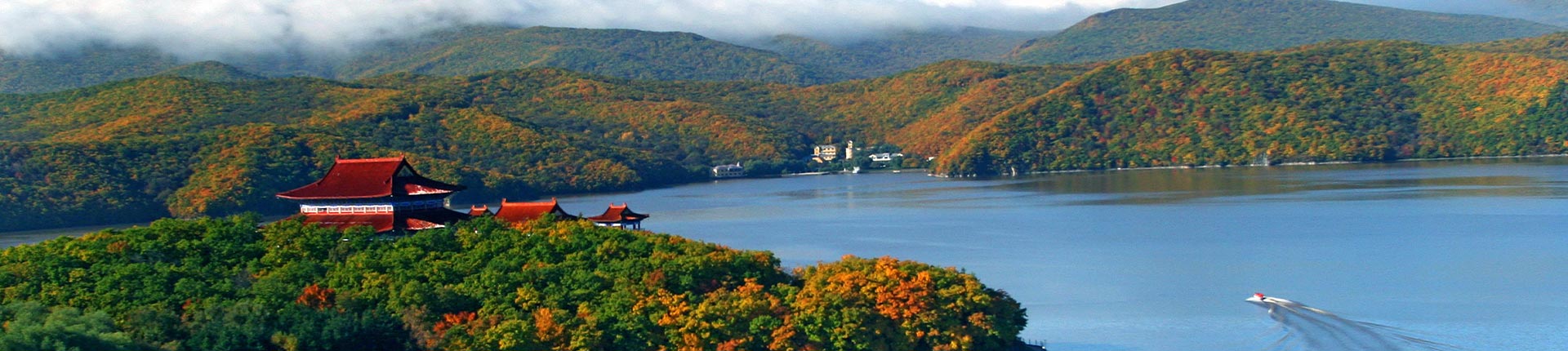
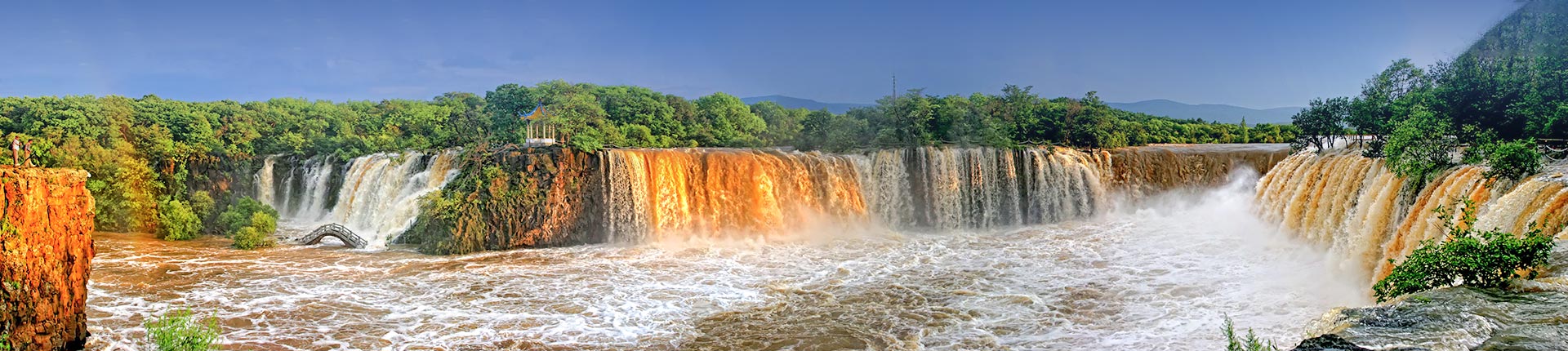
The Jingpo Lake Historical and Cultural Exhibition Hall is a comprehensive museum integrating local general history with revolutionary memories. It systematically unfolds the long-standing cultural scroll of the Jingpo Lake basin, recreating the arduous years when the Communist Party of China led revolutionary struggles here, and presents a grand regional development history spanning from the ancient Stone Age to the victory of the War to Resist U.S. Aggression and Aid Korea, empowering the deep integration of culture and tourism with profound cultural heritage.
From Ancient Times to the Jin and Yuan Dynasties: A Long-Standing Regional Civilization
As early as 20,000 years ago, ancient humans had already inhabited and thrived in the Jingpo Lake area. The ancestors chose to settle on peninsulas, relying on open vistas, convenient water sources, and natural terrain to fend off invaders and avoid floods. By the Neolithic Age, the discovery of the antler hoe—"Heilongjiang's First Hoe"—unearthed locally confirmed that the region had officially entered agricultural civilization. The Yinggeling Site, as a crucial origin of civilization in Northeast Asia, features six superimposed cultural layers spanning from the Neolithic Age to the Yuan Dynasty. The pottery pig remains excavated from the site vividly document the complete domestication process from wild boars to domestic pigs, showcasing the historical landscape of simultaneous agricultural and pastoral development in the area.
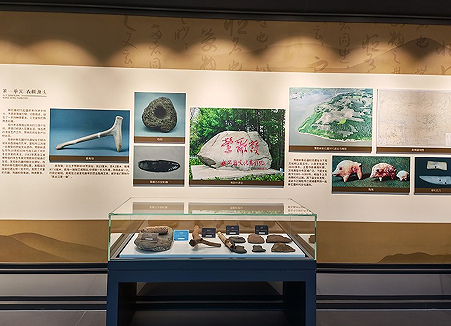
Over 3,000 years ago, the Sushen people traveled to the Central Plains bearing *kushi* (arrow shafts made of birch) and *shinu* (arrowheads made of stone) to pay tribute to the Zhou Emperor, an event recorded in Central Plains historical texts. Subsequent groups like the Yilou, Wuji, and Mohe, who shared the same lineage, are recognized as the ancient ancestors of the Manchu people. The museum houses an ancient map from the Daoguang era of the Qing Dynasty, which follows the cartographic conventions of the Tang and Song periods with south positioned at the top, preserving the precious record of Jingpo Lake’s Tang-era name, "Abu Lake."
During the Tang Dynasty, the Balhae Kingdom rose here as a vassal state of the Tang Empire, leaving behind two invaluable historical relics: the 22-kilometer-long Tang-era Great Wall, known as the "Jingpo Lake Border Wall," and the Tang-era Stone Lantern Tower—the oldest and largest surviving structure of its kind in China, standing 6.4 meters tall. This region was also the ancestral homeland of the Wanyan clan of the Jin Dynasty. By the late Jin period, Puxian Wannu established the Eastern Xia Kingdom, using the Chengzihou Mountain Fortress as his northern capital, where he held out against Mongol forces for 19 years by leveraging the rugged terrain.
During the Yuan-Ming transition, the Hurha tribe grew increasingly powerful. Their leader, Ahachu, was appointed by the Ming court to establish the Jianzhou Guard, fostering the expansion of the Jianzhou Jurchens. This laid the groundwork for Nurhaci’s later establishment of the Later Jin and, ultimately, the Qing Dynasty’s rise to power. In the Qing era, many exiled literati were banished to Ningguta, spreading Central Plains culture and education to the frontier, profoundly shaping the region’s language, customs, and cultural landscape.
Red Soil: Revolutionary Memories Forged in War
Jingpo Lake was among the earliest regions in Northeast China to embrace revolutionary ideals. Ma Jun returned to his hometown in his youth to spread progressive ideas, and the Manchurian Provincial Committee of the Communist Party of China established the Jingpo Lake District Committee here, organizing local guerrilla forces. In 1932, the Jingpo Lake Series of Battles erupted, comprising the Ambush at Qiangfeng, the Battle of Songyi Gully, the Skirmish at Guan’s Inn, and the Gaolingzi Railway Ambush—key engagements led by the Party in the Northeast against Japanese invaders. Li Fanwu arrived in Ning’an to rebuild the county committee and commanded the Ambush at Miaoling, crushing Japan’s colonial scheme to establish the "Jingpo Academy." In 1936, the Banshipi Secret Camp Conference was held, formally establishing the Fifth Army of the Northeast Anti-Japanese United Army. The resistance struggle entered its most arduous phase, with some troops relocating to the Soviet Union to form the Northeast Anti-Japanese United Army Training Brigade, remaining devoted to their homeland despite being abroad. After the victory in the War of Resistance, Zhang Wentai stayed in Ning’an, guiding land reforms and pioneering a new phase of local development.
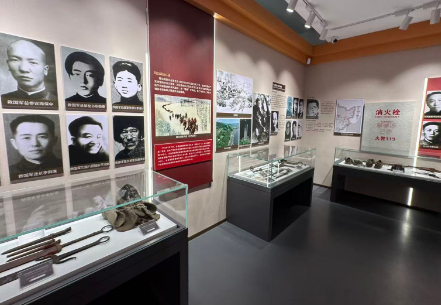
During the post-war reconstruction period, the workers of Jingpo Lake Power Plant ingeniously safeguarded the core power generation equipment, laying a solid energy foundation for Mudanjiang's post-war rebuilding. By collecting and integrating aircraft parts left by the Japanese puppet regime, Mudanjiang became the cradle of the People's Air Force. Regiment Commander Zhang Zhiyi salvaged artillery pieces sunk by Japanese forces from the depths of Jingpo Lake, bolstering our army's artillery strength. This artillery unit galloped across the Liaoshen battlefield and marched south to liberate the nation. Large quantities of artillery equipment were later modified for cold resistance in Mudanjiang before being deployed to the frontlines of the War to Resist U.S. Aggression and Aid Korea.
Each historical artifact and every heroic episode recounts the magnificent history of Jingpo Lake. We cordially invite you to visit the Jingpo Lake Historical and Cultural Exhibition Hall, where you can explore the millennium-old regional legacy and carry forward the enduring revolutionary spirit