



A Transcendent Listening Experience Across Time and Space
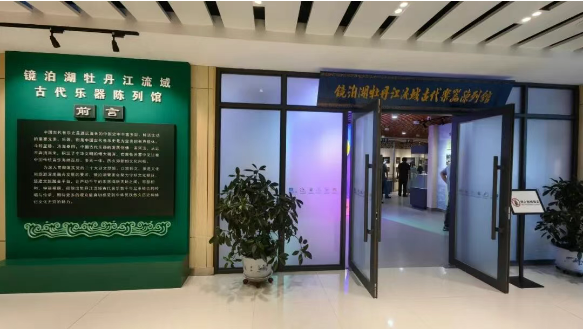
Ancient Musical Instrument Exhibition Hall of the Mudanjiang River Basin at Jingpo Lake
As the shimmering waves of Jingpo Lake glide past your fingertips, have you ever wondered that this picturesque land holds an epic of civilization written in musical instruments? Today, let us step into the Ancient Musical Instrument Exhibition Hall of the Mudanjiang River Basin at Jingpo Lake and unlock the musical codes spanning thousands of years!
01
Exhibition Hall • Music
PART.01/Sounds Through the Millennia
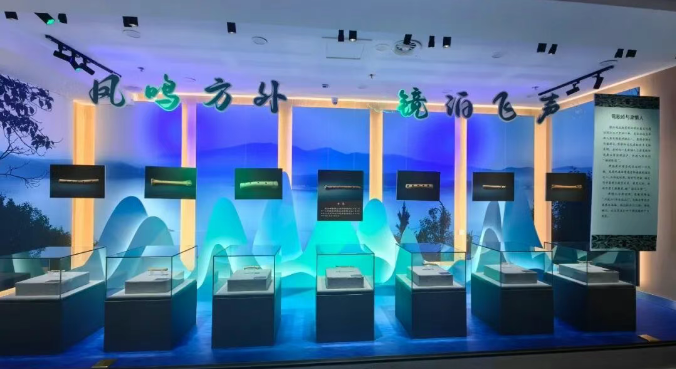
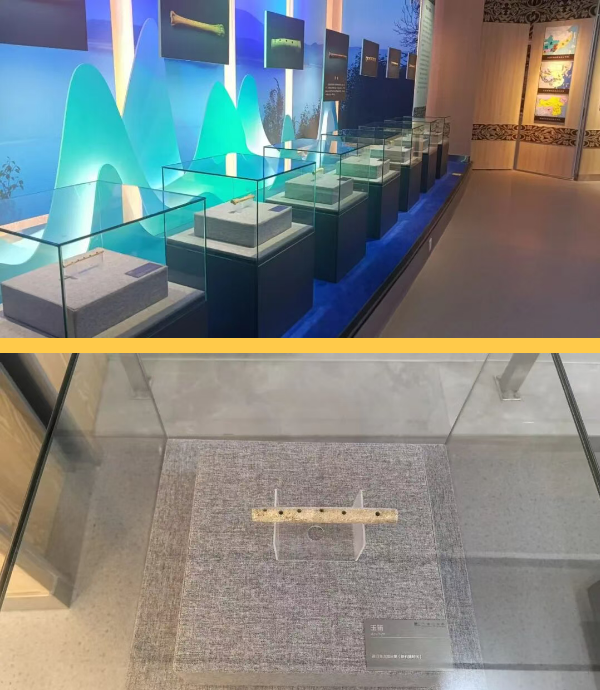
Covering an area of 580 square meters, the exhibition hall houses 234 "cultural relics that speak", divided into five major exhibition zones. Each artifact bears the marks of civilization in the Mudanjiang River Basin.The 7,000-year-old bone flute stands silently, crafted from eagle bones with precise carvings, as if the melodious notes played by the ancestors in the Neolithic Age can still be heard. The extremely difficult-to-make stone pig flute and stone eagle flute contain the dragon and phoenix symbols of Hongshan Culture, and were actually ritual vessels used to worship heaven and earth in ancient times.There are also pottery xuns that evolved from single‑holed to multi‑holed instruments, whose modern counterpart is today’s ocarina. Their inherited tones have traversed thousands of years.
02
Exhibition Hall • Culture
PART.02/Cultural Integration
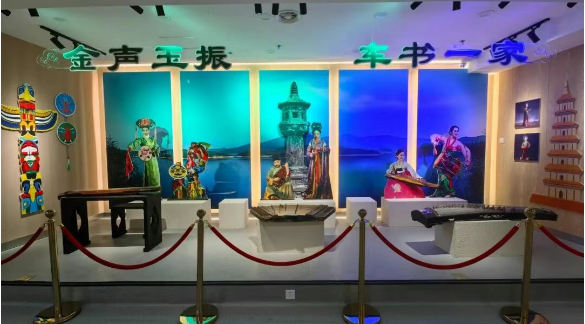
Here, you will find not only musical instruments, but also vivid chapters of history. The bronze nao from the Bohai Kingdom of the Tang Dynasty was used both to accompany dances and to command armies, bringing the legend of "sounding the metal to recall troops" to life through this exhibit. A bronze drum from southern China was unexpectedly unearthed in farmland in Bohai Town, with its frog patterns and cloud patterns telling the story of cultural integration between the north and the south.
From the chime bells of the pre-Qin period to the Pear Garden in the Tang Dynasty, from court elegant music to folk tunes, from the evolution of the huqin to the inheritance of the eight musical sounds, every exhibit recounts how music spread from the ruling class to ordinary society, witnessing the cultural integration of various ethnic groups.
03
Exhibition Hall • Elegance & Glory
PART.03/Romantic Art
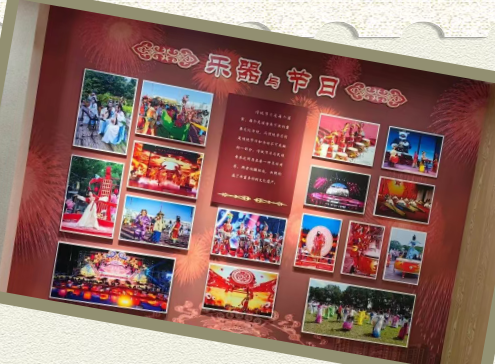
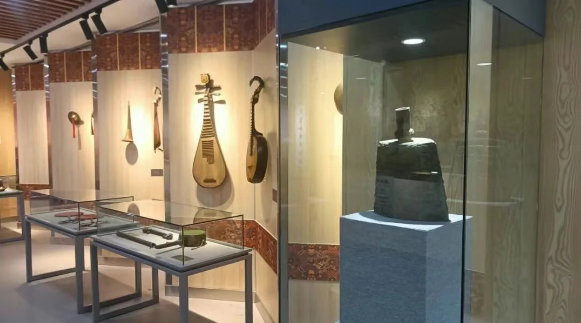
What is even more amazing is that the exhibition hall also holds interesting musical knowledge: the five musical notes correspond to Gong, Shang, Jiao, Zhi, Yu, and The River All Red was composed using this pentatonic scale. The Eight Sounds originated from eight types of materials, and even the name of the Western music box is derived from this concept. Walking through the hall is like traveling back to ancient times, watching how ancestors created touching melodies with bones, stones, pottery and wood, and experiencing the eternal romance of "High Mountains and Flowing Waters, meeting a soulmate". Four Periods in the Development of Ancient Chinese Musical Instruments With limited materials available, early musical instruments were mostly made from natural resources, such as bone flutes and stone flutes. This marked the first peak in the history of Chinese musical instrument development. People mastered metallurgy and began to produce metal musical instruments.Chime bells were the most prestigious instrument in Chinese ritual and music systems. The Dong Fang Hong melody broadcast worldwide by China’s first artificial satellite, Dong Fang Hong I, was performed on chime bells.Remote Antiquity
Pre‑Qin Period
This was the golden age in the history of Chinese musical instrument development. After the Qin Dynasty conquered the six rival states, musicians from all those regions were brought to Xianyang, which promoted musical exchanges.
During the Han Dynasty, diplomatic missions were sent to the Western Regions, introducing music and musical instruments from there into Central China. In the Tang Dynasty, extensive cultural exchanges with foreign countries brought a large number of overseas musical instruments to China, leading to unprecedented development and prosperity of musical instruments.
The Tang government established an official institution for music education and performance known as the Pear Garden. Amid the chaos and wars in the late Tang Dynasty, performers and musicians from the Pear Garden scattered across the country. From then on, music spread to the general public.
During this period, music was no longer exclusive to the imperial court, and folk music became the main focus of development.On the basis of Song Zaju (poetic drama), the famous Yuan Opera emerged in the Yuan Dynasty.From this time on, Chinese opera became the mainstream form of musical expression.Song, Yuan, Ming and Qing Dynasties
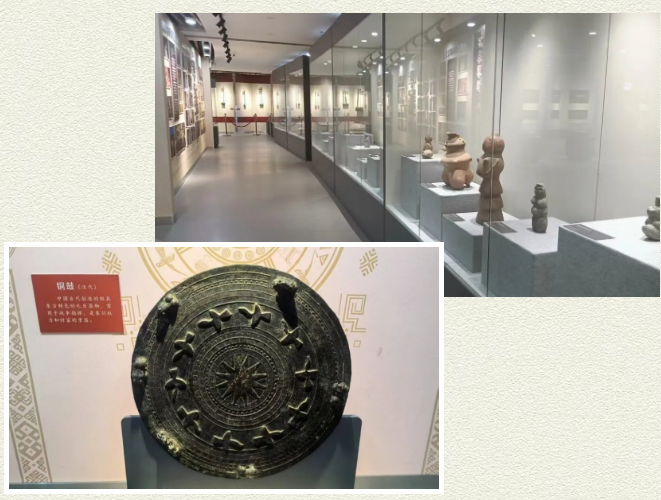
A museum is a great university.At the Ancient Musical Instrument Exhibition Hall of the Mudanjiang River Basin at Jingpo Lake, you can touch the origins of Northeast Asian civilization and appreciate the boundless wisdom of the ancient Chinese ancestors.When the millennia-old music meets the beautiful lakes and mountains of Jingpo Lake, a sense of cultural confidence quietly takes root in your heart.
Come to this "music museum" and keep a millennium-long appointment!Let the ancient bone flutes and pottery xuns accompany you, let the lingering charm of classical music walk with you, and unlock the little-known cultural charm of Jingpo Lake~