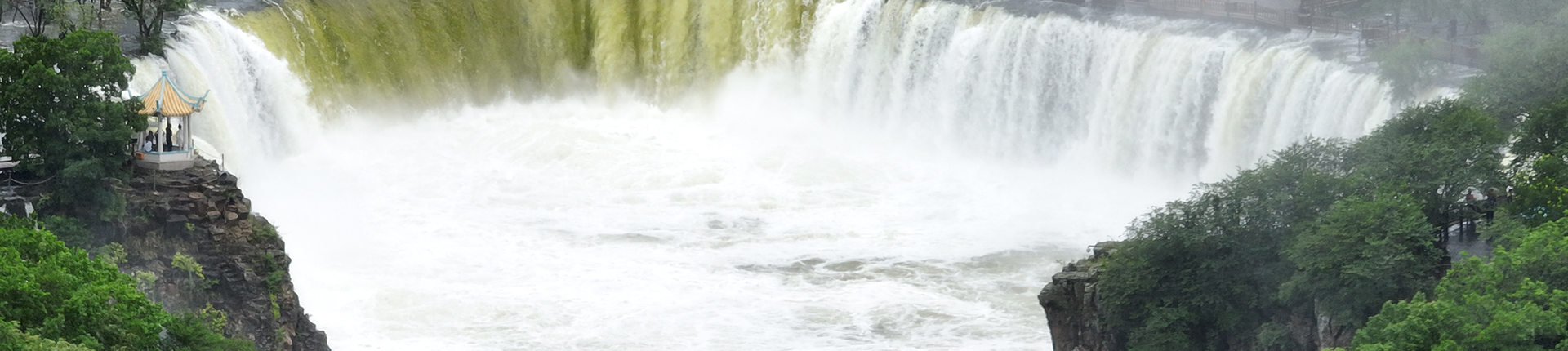




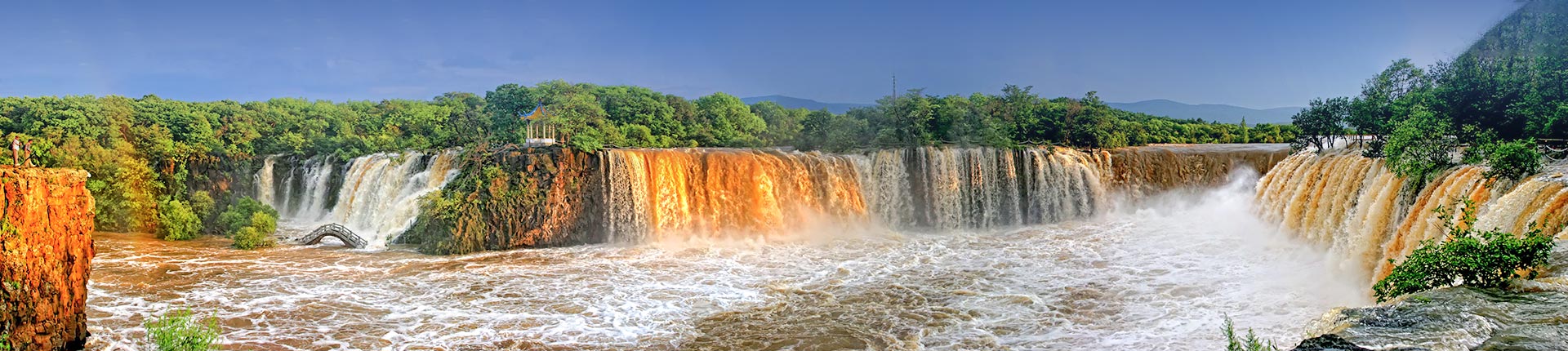
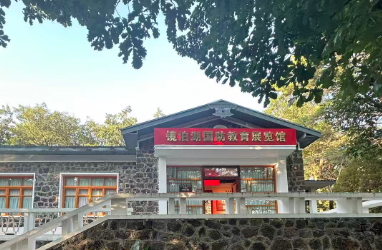
The Jingpo Lake National Defense Education Center was renovated and converted from the former Jingpo Lake Sanatorium of the Mudanjiang Prefectural Committee and officially opened to the public on August 1, 2025. Rooted in Mudanjiang's strategic location as a border area, the exhibition hall connects significant historical events such as border demarcation, frontier defense against invasions, the development of the People's Army, and civil-military collaboration. It highlights the region's unique "red" national defense resources and recounts the patriotic stories of defending the homeland on the frontier.
Mudanjiang is rich in natural resources and was historically an inland region. After the signing of the 1860 Treaty of Beijing, the land east of the Ussuri River was ceded, turning Mudanjiang into a border area. A section of the national boundary here lacks a natural river or watershed, with Boundary Marker No. 21 to the Hobutu River estuary forming a special straight-line demarcation—a crucial defensive zone in northern China. During the late Qing Dynasty, Wu Dacheng oversaw frontier affairs and collaborated with Hu Chuan to resurvey the border, replacing wooden markers with stone ones. This unique boundary line was precisely the one Hu Chuan, father of Hu Shi, helped establish. Patriotic general Nie Shicheng led modernized troops to patrol the border, with Feng Guozhang accompanying him and compiling *Records of an Eastern Journey*, which emphasized the area's military defense value. The construction of the Chinese Eastern Railway profoundly influenced Mudanjiang's urban development and imbued the land with a strong military-strategic character.
The exhibition hall reflects on the modern struggle against foreign aggression. Since the Shunzhi era of the Qing Dynasty, Tsarist Russian forces repeatedly encroached upon the Heilongjiang River basin, with Ningguta soldiers valiantly repelling the invaders and Sabusu leading troops to victory in the Battle of Albazin. After the territorial losses of the Opium War and the arduous 14-year War of Resistance against Japan, the Chinese nation endured immense sacrifices. Following the founding of the People's Republic, China conducted multiple self-defense counterattacks to safeguard its territorial integrity.
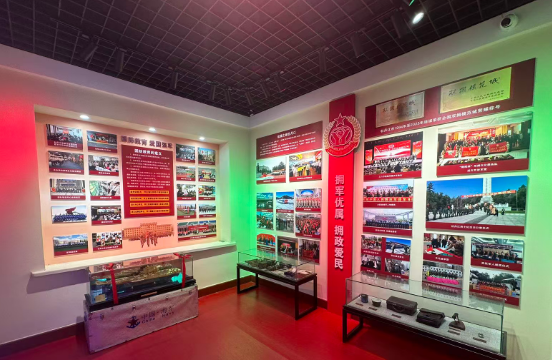
The exhibition systematically traces the development of the People's Army. From the Nanchang Uprising marking the beginning of its journey, through the Agrarian Revolution, War of Resistance, and Liberation War, the fundamental principle of "the Party commands the gun" was established. After 1949, the army was tested in the Korean War and border self-defense counterattacks, advancing technological modernization. The 2015 military reforms achieved a transformation from mechanization to informatization, restructuring the six military regions into five theater commands. The hall fully displays the evolution of military uniforms, from the rudimentary attire of the Red Army era to the Type 50, 55, 65, 85, 87, 97, and 07 series, culminating in the current Type 21 training and service uniforms—each change reflecting the army's growth.
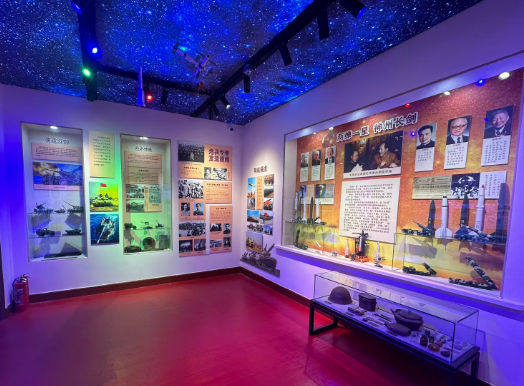
The exhibition highlights Mudanjiang's deep ties to the four major military branches, a unique aspect of its national defense culture. The People's Air Force took flight from Mudanjiang's old aviation school; the Yan'an Artillery School relocated here, becoming the cradle of PLA artillery. The "Meritorious Tank" was restored here, marking the start of armored forces' combat history. The Tian Song Detachment, originally a naval unit from the Jiaodong Military Region, stationed in Mudanjiang, produced anti-bandit hero Yang Zirong—evidence of the navy's early roots in this land. Li Su pioneered missile technology here, developing China's first training missile and forming its first missile battalion, which evolved into today's Rocket Force, with the Dongfeng series missiles tracing their origins to this effort. Despite being inland, Mudanjiang shares a strong naval connection, with vessels like the *Mudanjiang*, *Jingpo Lake*, and *Jingpo Lake Ship* joining the fleet, the latter forming a civil-military partnership with the Jingpo Lake Administrative Committee. A model of the aircraft carrier *Liaoning* (hull number 16) is displayed, symbolizing the century-long resurgence of the Chinese navy since the tragic fate of the Beiyang Fleet.
Mudanjiang has upheld the tradition of civil-military solidarity, repeatedly earning the title of National Model City for Mutual Support. Frontier troops and civilians work together to secure the northeastern border. After the Zhenbao Island incident, the 7051 civil defense project was launched, incorporating the Jingpo Lake facility as a key evacuation site, now repurposed for defense education, embodying the principle of "long-term preparedness, focused construction, and peacetime-wartime integration."
The Air Force took off here, the Artillery and Armored Forces were formed here, the Navy was tempered here, and the Rocket Force sprouted here—a rare nationwide connection to all four branches. Visiting the Jingpo Lake National Defense Education Center offers a journey through history, a reflection on frontier defense, an appreciation of military modernization, and a deepening of patriotism and national defense awareness, perpetuating the enduring bond between the military and the people.