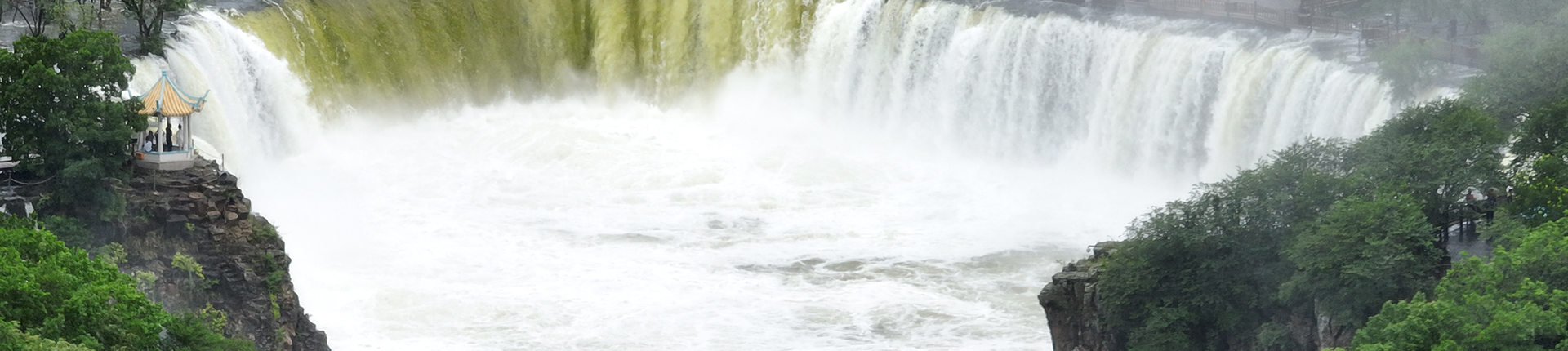
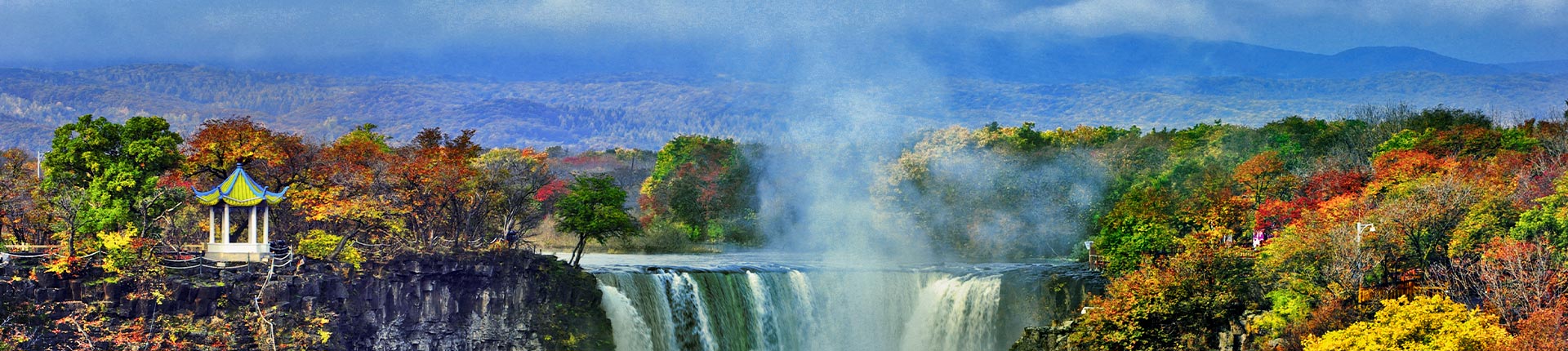
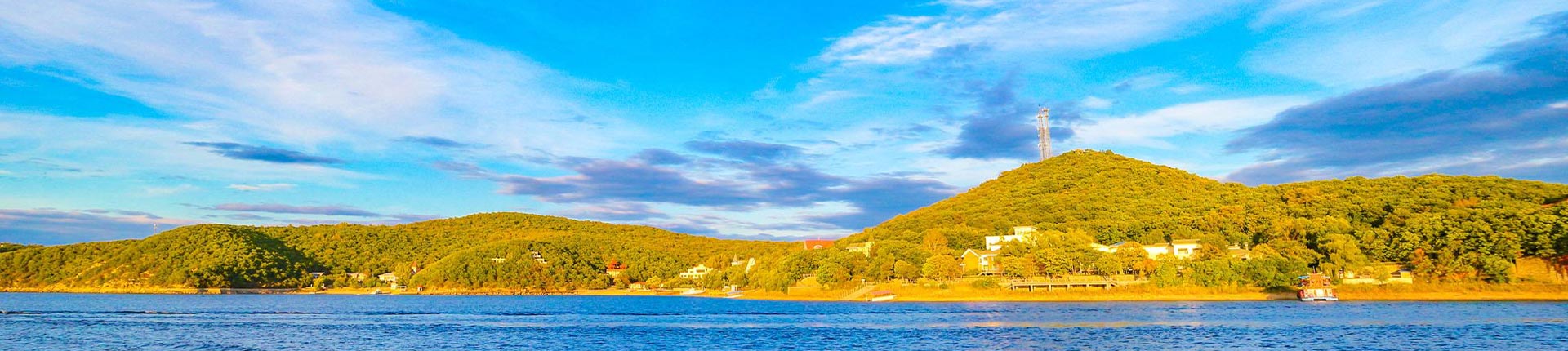
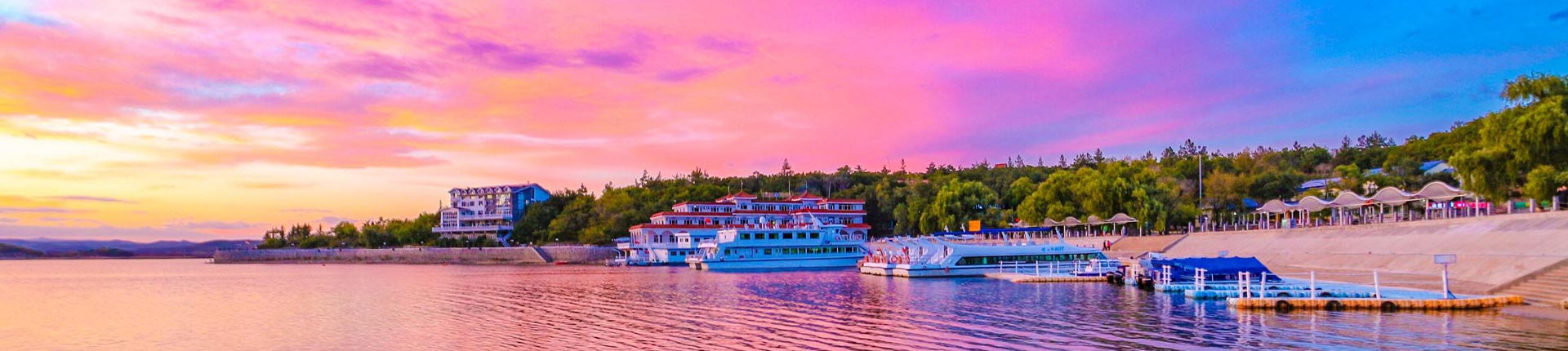
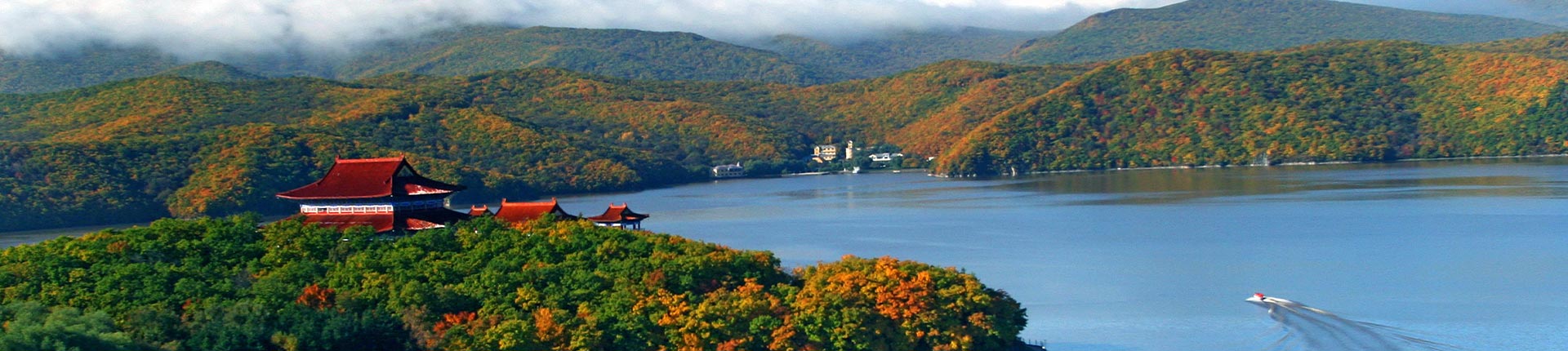
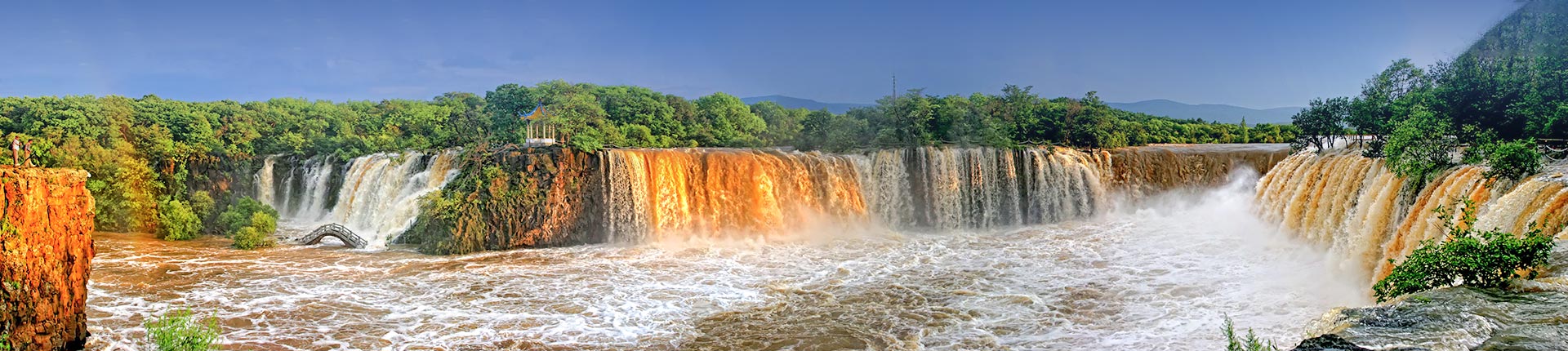
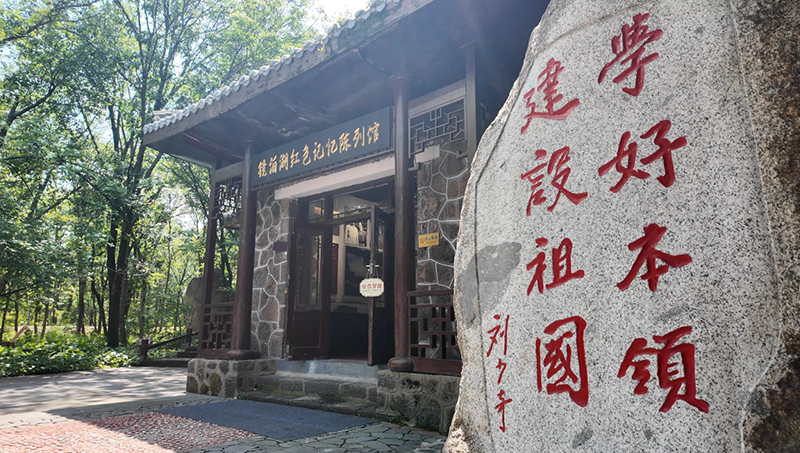
Jingpo Lake boasts not only stunning natural landscapes but also profound red memories. The Jingpo Lake Red Memory Exhibition Hall is located on the south bank of the Diaoshuilou Waterfall at the entrance of the Qijing Stele Garden. Covering an area of 200 square meters, it was opened on August 1, 2022, and serves as an important site for Party spirit education, patriotism, and Party history education in the Jingpo Lake scenic area. The exhibition hall consists of four galleries and features five major themes, focusing on the precious historical event of Comrade Liu Shaoqi's inspection of Jingpo Lake in 1961, while tracing the origins and development of the scenic area's planning and construction.
In late July 1961, to investigate and resolve challenges in forestry production, then-President Liu Shaoqi conducted an inspection of the northeastern forest region, arriving at Jingpo Lake on July 27. Over the course of just four days, he inspected the Jingpo Lake Power Plant, a field geological exploration camp, a secondary oak forest transformation experimental base, a forestry nursery, and a ginseng plantation. He fully affirmed the local ecological landscape and the achievements in forestry experiments, proposing that Jingpo Lake be developed into an international park—laying the initial grand blueprint for its future. On his way out of Mudanjiang, he listened to reports on local forestry work and explicitly emphasized the need for forestry production to pursue both artificial and natural regeneration simultaneously.
Due to the influence of the era, the development of Jingpo Lake was temporarily halted. In 1980, after Comrade Liu Shaoqi was rehabilitated, Heilongjiang Province resumed planning and construction efforts for Jingpo Lake. Provincial government meeting records explicitly stated that developing Jingpo Lake into a high-mountain lake tourism area and a key nature reserve was Liu Shaoqi’s final wish. That same year, the Jingpo Lake Provincial Nature Reserve was established, and the Jingpo Lake Management Bureau was formed. In 1982, Jingpo Lake was selected as one of China’s first group of national key scenic areas. The museum preserves precious footage of Liu Shaoqi and his wife at the Diaoshuilou Waterfall, capturing the historic moment when the great leader stood by the lakeshore.
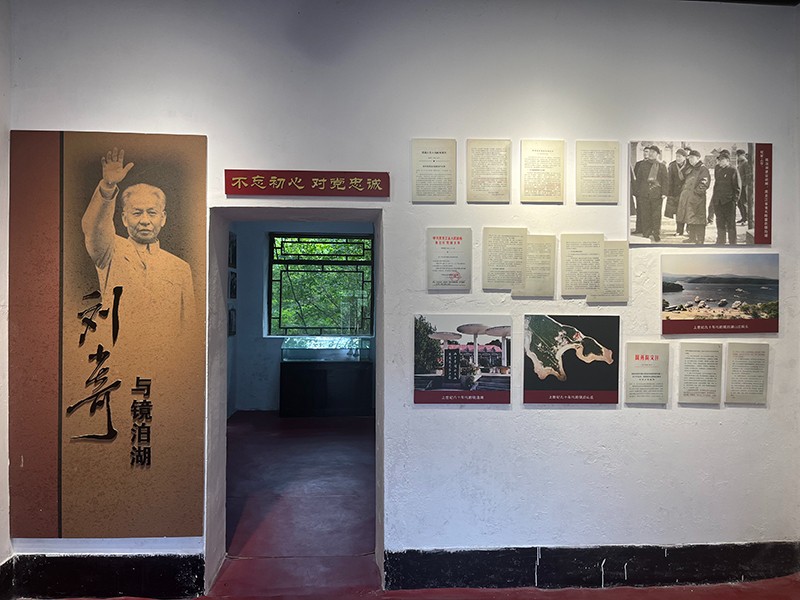
The exhibition hall provides a comprehensive retrospective of Comrade Liu Shaoqi's illustrious life. As a great Marxist, proletarian revolutionary, and one of the principal leaders of the Party and the state, he dedicated himself to the revolutionary cause in his youth, determined to save the nation and its people. He led the Anyuan Railway and Mine Workers' Strike, directed underground struggles in the White areas amid the White Terror, participated in the Long March, and supported the correct revolutionary propositions at the Zunyi Conference. During the War of Resistance Against Japan, he traveled across major strategic regions to establish anti-Japanese base areas, authored classic works such as *How to Be a Good Communist*, and systematically expounded on Mao Zedong Thought. After the victory in the war, he formulated the strategic policy of "expanding northward while defending southward," contributing to the development of the Northeast base areas. Following the founding of the People's Republic of China, he actively explored the path of socialist construction. Despite enduring unjust persecution, he remained steadfast in his belief as a Communist, confident that "history, after all, is written by the people."
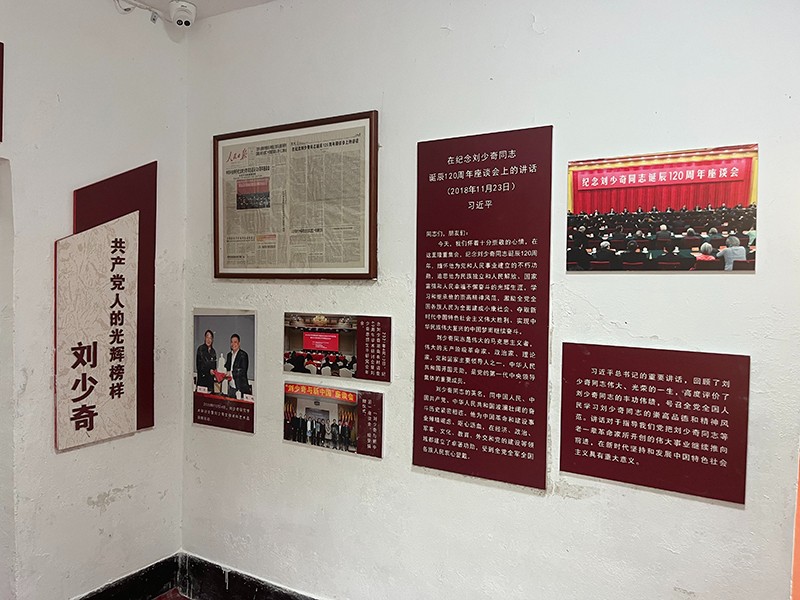
The exhibition hall highlights the deep connection between Liu Shaoqi and the black soil of Northeast China. As early as 1929, he served as Secretary of the Manchurian Provincial Committee of the Communist Party of China, traveling twice to Harbin to lead worker movements and writing tens of thousands of words on struggle reports. In 1961, he conducted in-depth research in the forest regions of the Greater and Lesser Khingan Mountains, establishing three guidelines with grassroots workers. Traveling light and living on a dedicated train, he directly addressed the imbalance between logging and reforestation, empathized with the hardships of frontline forestry workers, and pushed for improvements in labor protection and living conditions, leaving behind touching stories of unity between the Party and the people. The exhibition hall restores the historical appearance of Liu Shaoqi’s cabin, connecting it to the display hall via Liu Shaoqi’s Path and the Qijing Stele Garden. Jingpo Lake Scenic Area has also officially joined the National Liu Shaoqi Memorial Sites Alliance, continuing the legacy of red culture.
The exhibition is themed around the "Five Glorious Examples" summarized by General Secretary Xi Jinping, showcasing Comrade Liu Shaoqi’s noble character: remaining true to the Party’s ideals, upholding truth and seeking truth from facts, daring to take responsibility and innovate, diligently integrating study with practice, and caring for the people while maintaining integrity. It displays classic works and handwritten manuscripts such as *How to Be a Good Communist* and *On the Party*, allowing visitors to reflect on the spiritual ethos of older-generation Communists.
Time has passed, and the vision of our predecessors has become reality. Today, Jingpo Lake is a national 5A-level tourist attraction and a UNESCO Global Geopark, fulfilling the original dream of building an international park. Stepping into the Jingpo Lake Red Memory Exhibition Hall, visitors trace historical imprints to appreciate the great leader’s devotion to his country, carrying forward the red legacy and drawing spiritual strength to forge ahead.